

Radiation is a phenomenon that exists in various environments, from industrial settings to outer space. In applications where cast carbon steel parts are used, understanding their radiation - resistance properties is crucial. As a supplier of cast carbon steel parts, I am well - versed in the characteristics of these materials and their performance under radiation.
Composition and Structure of Cast Carbon Steel
Cast carbon steel is primarily composed of iron and carbon, with small amounts of other elements such as manganese, silicon, sulfur, and phosphorus. The carbon content in cast carbon steel typically ranges from 0.12% to 2.0%. The microstructure of cast carbon steel consists of ferrite and pearlite, and sometimes cementite depending on the carbon content. This composition and structure play a fundamental role in determining its radiation - resistance properties.

Radiation Types and Their Effects on Cast Carbon Steel
Gamma Radiation
Gamma rays are high - energy electromagnetic waves. When gamma radiation interacts with cast carbon steel, it can cause ionization of atoms in the steel. The energy of gamma rays can be absorbed by the atoms, knocking out electrons and creating ion - pairs. This ionization can lead to changes in the electrical and mechanical properties of the steel. However, cast carbon steel has a relatively high density, which provides a certain degree of shielding against gamma radiation. The high atomic number of iron in the steel helps to absorb and scatter gamma rays. For example, in nuclear power plants, some cast carbon steel components are used in areas where gamma radiation is present. These components can act as a partial barrier to reduce the intensity of gamma rays reaching other parts of the system.
Neutron Radiation
Neutrons are uncharged particles, and they can penetrate materials more easily than charged particles. When neutrons interact with cast carbon steel, they can cause nuclear reactions. For instance, neutrons can be captured by iron nuclei, leading to the formation of radioactive isotopes. This process is known as neutron activation. The formation of radioactive isotopes can pose a radiation hazard to the environment and workers. Additionally, neutron radiation can cause displacement damage in the steel lattice. The high - energy neutrons can knock atoms out of their lattice positions, creating vacancies and interstitial atoms. These lattice defects can change the mechanical properties of the steel, such as reducing its ductility and increasing its hardness.
Alpha and Beta Radiation
Alpha particles are helium nuclei, and beta particles are either electrons or positrons. Compared to gamma and neutron radiation, alpha and beta particles have relatively low penetration power. Cast carbon steel can effectively stop alpha particles due to their large mass and positive charge. Beta particles can penetrate a thin layer of cast carbon steel, but the steel can still absorb a significant amount of their energy. In most cases, when cast carbon steel parts are used in environments with alpha or beta radiation, they do not experience severe degradation of their properties.
Factors Affecting the Radiation - Resistance of Cast Carbon Steel Parts
Carbon Content
The carbon content in cast carbon steel affects its radiation - resistance properties. Higher carbon content generally leads to a harder and more brittle steel. In the context of radiation, a harder steel may be more resistant to some forms of radiation - induced deformation. However, a high - carbon steel may also be more prone to cracking under radiation - induced stress. On the other hand, low - carbon steel is more ductile, which can help it to better withstand the lattice defects caused by radiation.
Alloying Elements
Alloying elements can significantly improve the radiation - resistance of cast carbon steel. For example, adding nickel to cast carbon steel can enhance its toughness and resistance to radiation - induced embrittlement. Chromium can form a protective oxide layer on the surface of the steel, which can reduce the corrosion caused by radiation - induced chemical reactions. Molybdenum can improve the high - temperature strength and radiation - resistance of the steel.
Heat Treatment
Heat treatment processes such as annealing, quenching, and tempering can modify the microstructure of cast carbon steel, thereby affecting its radiation - resistance properties. Annealing can relieve internal stresses in the steel and make the microstructure more uniform, which can improve its resistance to radiation - induced damage. Quenching and tempering can adjust the hardness and toughness of the steel, making it more suitable for specific radiation environments.
Applications of Cast Carbon Steel Parts in Radiation - Prone Environments
Nuclear Industry
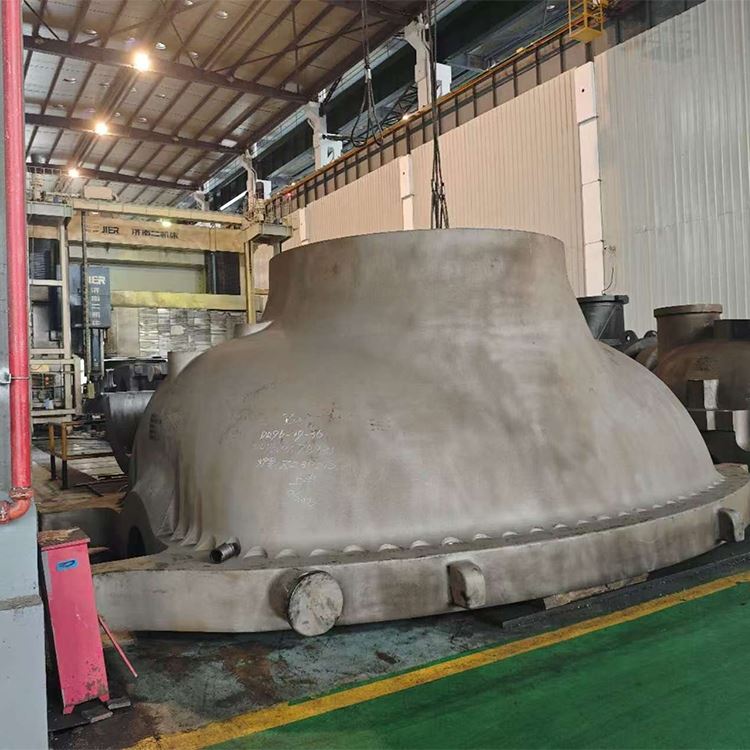
In nuclear power plants, cast carbon steel parts are widely used. For example, Large Steel Casting Box can be used to house various nuclear components. These boxes need to have good radiation - resistance properties to protect the internal components from radiation and also to prevent the leakage of radiation to the outside. Cylinder Support is another important component in nuclear power plants. It needs to maintain its mechanical properties under radiation to ensure the stability of the cylinders.
Space Industry
In space, spacecraft are exposed to various types of radiation, including solar flares and cosmic rays. Cast carbon steel parts can be used in the structure of spacecraft. Large Turbine Housings are an example of components that need to resist radiation. These housings protect the turbines from radiation damage, ensuring the normal operation of the power generation systems in spacecraft.
Testing and Evaluation of Radiation - Resistance Properties
To ensure the quality and performance of cast carbon steel parts in radiation - prone environments, various testing methods are used. Non - destructive testing techniques such as ultrasonic testing, radiographic testing, and magnetic particle testing can be used to detect internal defects in the steel parts before and after radiation exposure. Mechanical testing, including tensile testing, hardness testing, and impact testing, can be used to evaluate the changes in mechanical properties caused by radiation. Additionally, chemical analysis can be performed to detect the formation of radioactive isotopes and changes in the chemical composition of the steel.
Conclusion
As a supplier of cast carbon steel parts, I understand the importance of radiation - resistance properties in different applications. The radiation - resistance of cast carbon steel is affected by its composition, structure, and the type of radiation it is exposed to. By carefully controlling the carbon content, adding appropriate alloying elements, and applying suitable heat treatment processes, we can improve the radiation - resistance of our cast carbon steel parts. Our products, such as Large Steel Casting Box, Cylinder Support, and Large Turbine Housings, are designed to meet the high - quality requirements of radiation - prone environments.
If you are in need of high - quality cast carbon steel parts with excellent radiation - resistance properties, please feel free to contact us for procurement and further discussion. We are committed to providing you with the best products and services.
References
- ASM Handbook Volume 1: Properties and Selection: Irons, Steels, and High - Performance Alloys. ASM International.
- Radiation Effects in Materials: An Introduction. John W. McClory, John Wiley & Sons.
- Nuclear Engineering and Technology, various issues related to the application of cast carbon steel in nuclear power plants.


