As a supplier of ductile iron parts, I've witnessed firsthand the critical role that casting speed plays in the production and quality of these components. Ductile iron, also known as nodular cast iron, is a type of cast iron with graphite nodules that provide it with enhanced ductility and toughness compared to traditional cast iron. The casting speed, which refers to the rate at which molten metal is poured into the mold, can have a profound impact on the final properties and performance of ductile iron parts. In this blog, I'll delve into the various effects of casting speed on ductile iron parts and why it's essential to optimize this parameter for high-quality production.
Microstructure and Mechanical Properties
One of the most significant effects of casting speed on ductile iron parts is its influence on the microstructure and mechanical properties. When the casting speed is too high, the molten metal may not have enough time to fill the mold properly, leading to incomplete filling and the formation of voids or porosity in the part. These defects can significantly reduce the strength and ductility of the ductile iron, making it more prone to cracking and failure under stress.
On the other hand, a very low casting speed can result in a slow cooling rate, which can cause the graphite nodules to grow larger and more irregularly. This can lead to a decrease in the mechanical properties of the ductile iron, such as its tensile strength and hardness. Additionally, a slow casting speed can increase the risk of segregation, where the chemical composition of the molten metal varies throughout the part, further affecting its performance.
To achieve the optimal microstructure and mechanical properties, it's crucial to find the right balance in casting speed. A moderate casting speed allows the molten metal to fill the mold completely while maintaining a proper cooling rate, resulting in a fine and uniform microstructure with well-distributed graphite nodules. This leads to improved mechanical properties, such as high tensile strength, good ductility, and excellent wear resistance, making the ductile iron parts suitable for a wide range of applications.
Surface Finish
The casting speed also has a direct impact on the surface finish of ductile iron parts. A high casting speed can cause the molten metal to splash and create rough or uneven surfaces on the part. This can be particularly problematic for parts that require a smooth surface finish, such as those used in precision machinery or automotive applications.
Conversely, a low casting speed can result in a longer solidification time, which can allow the molten metal to react with the mold surface and form a layer of oxide or other contaminants. This can also lead to a poor surface finish and may require additional machining or finishing operations to achieve the desired surface quality.
By controlling the casting speed, we can ensure a smooth and uniform surface finish on the ductile iron parts. A moderate casting speed allows the molten metal to flow smoothly into the mold, minimizing the risk of splashing and surface defects. This not only improves the aesthetic appearance of the parts but also enhances their functionality and performance.
Dimensional Accuracy
Another important aspect affected by casting speed is the dimensional accuracy of ductile iron parts. A high casting speed can cause the molten metal to expand and contract rapidly as it fills the mold, leading to dimensional variations and inaccuracies in the final part. This can be especially critical for parts that require tight tolerances, such as those used in aerospace or medical applications.
A low casting speed, on the other hand, can result in a longer solidification time, which can allow the part to deform or shrink unevenly as it cools. This can also lead to dimensional inaccuracies and may require additional machining or adjustment to meet the required specifications.
To ensure high dimensional accuracy, it's essential to carefully control the casting speed. By maintaining a consistent and appropriate casting speed, we can minimize the thermal stresses and distortions that can occur during the casting process, resulting in parts with precise dimensions and tight tolerances.
Production Efficiency
In addition to its impact on the quality of ductile iron parts, casting speed also plays a crucial role in production efficiency. A high casting speed can increase the production rate, allowing us to produce more parts in a shorter period of time. This can be particularly beneficial for large-scale production runs or when there is a high demand for ductile iron parts.
However, it's important to note that increasing the casting speed too much can also lead to an increase in the number of defective parts, which can offset the benefits of higher production rates. Therefore, it's necessary to find the optimal casting speed that balances production efficiency with quality.
By optimizing the casting speed, we can improve the overall production efficiency of ductile iron parts. This includes reducing the cycle time, minimizing the scrap rate, and increasing the throughput of our manufacturing process. As a result, we can offer our customers high-quality ductile iron parts at competitive prices and with shorter lead times.
Case Studies
To illustrate the effects of casting speed on ductile iron parts, let's take a look at a few case studies.
Case Study 1: Ductile Iron Parts Workbench
In the production of a ductile iron workbench, we initially used a relatively high casting speed to increase the production rate. However, we noticed that the parts had a rough surface finish and some dimensional inaccuracies. After conducting a detailed analysis, we found that the high casting speed was causing the molten metal to splash and solidify too quickly, resulting in these defects.
We then reduced the casting speed to a more moderate level and made some adjustments to the gating system to ensure a smooth and uniform flow of the molten metal. As a result, the surface finish of the workbench improved significantly, and the dimensional accuracy was within the required tolerances. This not only enhanced the quality of the product but also increased customer satisfaction.
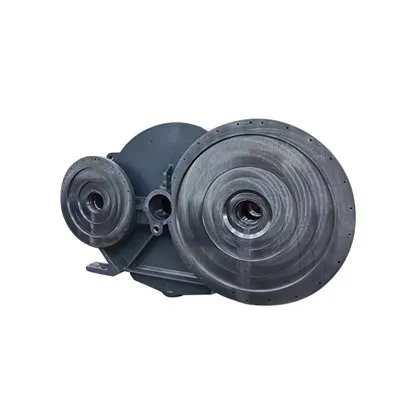
Case Study 2: Ductile Iron Parts Gear Box
For the production of a ductile iron gear box, we experimented with different casting speeds to optimize the mechanical properties of the parts. We found that a very low casting speed resulted in a coarse microstructure with large graphite nodules, which led to a decrease in the tensile strength and hardness of the gear box.
On the other hand, a high casting speed caused the formation of porosity and voids in the part, reducing its ductility and toughness. After several trials, we determined the optimal casting speed that provided a fine and uniform microstructure with well-distributed graphite nodules. This resulted in gear boxes with excellent mechanical properties, such as high strength, good ductility, and low wear rate, making them suitable for heavy-duty applications.


Case Study 3: Compressor Rotor
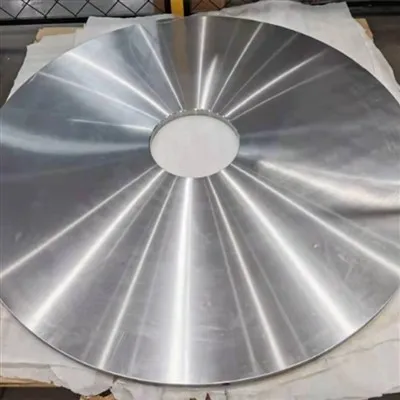
In the production of a compressor rotor, we focused on achieving a high surface finish and dimensional accuracy. By carefully controlling the casting speed and using advanced casting techniques, we were able to produce compressor rotors with a smooth surface finish and precise dimensions. This not only improved the performance of the compressor but also reduced the noise and vibration levels, resulting in a more efficient and reliable operation.
Conclusion
In conclusion, casting speed has a significant impact on the quality, performance, and production efficiency of ductile iron parts. By carefully controlling the casting speed, we can optimize the microstructure, mechanical properties, surface finish, and dimensional accuracy of the parts, while also improving production efficiency and reducing costs.
As a supplier of ductile iron parts, we understand the importance of finding the right balance in casting speed to meet the specific requirements of our customers. We have extensive experience and expertise in the casting process, and we use state-of-the-art equipment and techniques to ensure the highest quality of our products.
If you're in the market for high-quality ductile iron parts, we invite you to contact us for a consultation. Our team of experts will work closely with you to understand your needs and provide you with the best solutions for your application. We look forward to the opportunity to serve you and build a long-term partnership based on quality, reliability, and customer satisfaction.
References
- Campbell, J. (2003). Castings. Butterworth-Heinemann.
- Kalpakjian, S., & Schmid, S. R. (2014). Manufacturing Engineering and Technology. Pearson.
- Totten, G. E., & MacKenzie, D. E. (2003). Handbook of Aluminum Alloy and Steel Casting Design. CRC Press.