



Grey Cast Iron Parts
The company has long carried out R&D cooperation and technical exchanges on mechanical processing-related topics with major colleges and universities, providing a strong technical capacity reserve and human resources guarantee for the development of the company.It provides one-stop technical services such as welding, precision machining, and surface spraying for medium and large parts, high-precision parts, and functional structural components of medium and high-end equipment.The supporting testing equipment includes three-coordinate, altimeter, hardness tester, coating thickness gauge, etc.
Why Choose Us
Professional Talent
The company attaches great importance to the improvement of technical capabilities and the introduction and training of talents. At present, there are more than 500 employees, and more than 90% of them have college degrees or above.
Production Capacity
We are committed to precision machining,with experienced process planning and mastery of programming and manufacturing standards for precision components. We can provide customers with comprehensive technical support services and solutions. We have a stable long-term cooperative relationship with suppliers.
Our Service
Demark adheres to the business philosophy of quality, innovation and service, strict manufacturing process, reliable performance quality, and mature manufacturing process technology.
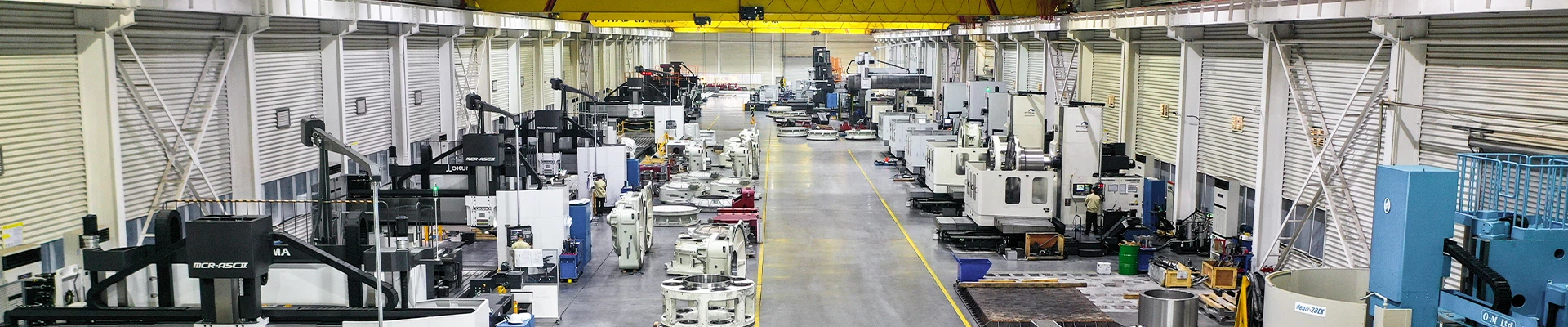
My Factory
Demark (Zhejiang) Precision Technology Co., Ltd. is a high-tech enterprise that provides customers with professional high-precision machining services.


Gray Iron Castings Microstructure
Gray iron derives its properties from flake graphite in its microstructure. Its unique attributes include excellent machinability. When the composition of the molten iron and its cooling rate are suitable, the carbon in the iron separates during solidification and forms interconnected graphite flakes.
Tensile and Yield Strength
Gray iron does not have a measurable yield strength, the range for tensile strength is 20,000 psi – 60,000 psi.
Damping Capacity
The relative ability of a material to absorb vibration is evaluated as its damping capacity. The quelling of vibration by converting the mechanical energy into heat can be important in structures and devices with moving parts.
Tooling and Patterns
We can help you turn your casting needs into reality by starting with your print and creating the tooling you will need to cast the finished part, or by utilizing existing tooling.
Green Sand Molding
Molds are produced using 14”x19” and 20”x24” automatic, green sand molding machines.
Sand Cores
Cores are used in the casting process to make the interior shape and design of the casting. Shell cores are made on-site in our core department.
Finishing Services
Castings are shot-blasted to remove left-over sand from the molding process then sent to our grinding department where parting lines and excess iron are removed.

Application of Grey Cast Iron Parts
Cinder Blocks
Gray cast iron’s most common use is as an additive for cinder block manufacturing.
Manhole Covers
Another everyday use for gray cast iron is manhole covers on city streets, for which gray iron is typically the primary material.
Cylinder Blocks for Internal Combustion Engines
The majority of internal combustion vehicles produced for well over a century have used engines built from gray cast iron cylinder blocks.
Industrial Machinery Parts
From housing materials and hydraulic parts to machine bases and various components, gray cast iron is commonly used for a wide range of machinery in industrial manufacturing applications.
Heat Treatment for Grey Cast Iron Parts
Stress Relieving
Stress-relieving is a heat treatment technique that subjects the cast iron to a constant temperature below its critical temperature before exposing it to controlled cooling. As the temperature gets higher, the mechanical properties of the cast iron typically change.
Annealing
Another heat treatment technique that can be applied to cast iron is annealing. It is a heat treatment technique that changes the microstructure of the cast iron, therefore changing its mechanical characteristics.
Quenching and tempering
Both quenching and tempering are typically applied to cast irons to improve their hardness. But to yield great results, various parameters should be selected and controlled. Selecting and controlling the parameters, such as the temperature, can then prevent the cast irons from distorting, warping, burning, or quench cracking.
Steps To Custom Grey Cast Iron Parts
Making wooden, resin, plastic, aluminum or iron patterns according to the samples, or drawings, and requirements of customers.
After get the patterns, making rough iron castings by sand casting, or other casting processes.
After sand blasting, and cleaning, proceed the machining works if it is necessary,
Finally, painting, or do the special coating and packing according to the requirements.
Company Certificate


