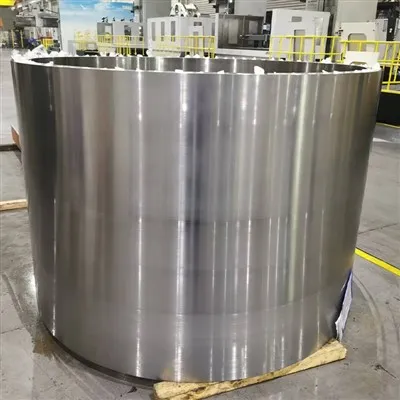
As a trusted supplier of Forged Parts Valve Cover, I've witnessed firsthand the importance of quality in the manufacturing process. Forged parts valve covers are crucial components in various machinery, and understanding their common defects is essential for both manufacturers and end - users. In this blog, I'll delve into the most prevalent issues that can occur in forged parts valve covers and discuss how to address them.
1. Surface Cracks
Surface cracks are one of the most visible and concerning defects in forged parts valve covers. These cracks can occur during the forging process due to several factors. One primary cause is excessive stress during deformation. When the forging force is too high or the material is not properly heated, it can lead to the formation of cracks on the surface of the valve cover.
Another contributing factor is the presence of impurities in the raw material. Impurities such as sulfur, phosphorus, or non - metallic inclusions can weaken the material's structure, making it more prone to cracking. For example, sulfur can form brittle sulfide compounds, which act as stress concentrators and initiate crack propagation.
To detect surface cracks, visual inspection is often the first step. However, for more accurate and in - depth detection, non - destructive testing methods such as magnetic particle inspection or ultrasonic testing can be employed. Once surface cracks are detected, the valve cover may need to be repaired or, in severe cases, discarded. Repair methods can include welding, but this requires careful consideration of the material properties and the welding process to ensure the integrity of the part.
2. Porosity
Porosity refers to the presence of small holes or voids within the forged parts valve cover. This defect can significantly reduce the strength and durability of the valve cover. Porosity can be caused by several factors, including improper melting and pouring techniques during the forging process.
During melting, if the metal is not properly degassed, gases such as hydrogen, nitrogen, or oxygen can be trapped in the molten metal. When the metal solidifies, these gases form pores. In addition, if the pouring speed is too fast or the mold design is not optimized, it can lead to the formation of porosity due to insufficient filling or turbulence in the molten metal.
To prevent porosity, proper melting and pouring procedures should be followed. This includes degassing the molten metal to remove dissolved gases, controlling the pouring speed and temperature, and optimizing the mold design to ensure proper filling. Non - destructive testing methods such as X - ray inspection can be used to detect porosity within the valve cover.
3. Incomplete Filling
Incomplete filling occurs when the molten metal does not fully fill the mold cavity during the forging process. This results in a valve cover with missing sections or thin areas, which can compromise its functionality. Incomplete filling can be caused by several factors, including low pouring temperature, insufficient pouring pressure, or a complex mold design.
If the pouring temperature is too low, the molten metal may solidify before it can fully fill the mold cavity. Insufficient pouring pressure can also prevent the metal from reaching all parts of the mold. Complex mold designs with narrow channels or thin sections can make it difficult for the molten metal to flow evenly, leading to incomplete filling.


To address incomplete filling, the pouring temperature and pressure should be carefully controlled. The mold design may also need to be revised to simplify the shape and improve the flow of the molten metal. Visual inspection can easily identify incomplete filling, and in most cases, the defective valve cover needs to be remade.
4. Misalignment
Misalignment is a defect where the different parts of the valve cover are not properly aligned. This can occur during the forging process if the dies are not properly aligned or if there is movement during the forging operation. Misalignment can also be caused by improper handling or storage of the forged parts.
Misaligned valve covers can lead to problems such as leakage, improper sealing, and reduced performance. To prevent misalignment, proper die alignment and maintenance are crucial. During the forging process, the dies should be accurately positioned and secured to ensure that the valve cover is forged with the correct alignment. In addition, proper handling and storage procedures should be followed to prevent any accidental misalignment.
5. Hardness Variation
Hardness variation refers to the uneven distribution of hardness within the forged parts valve cover. This defect can affect the wear resistance and mechanical properties of the valve cover. Hardness variation can be caused by several factors, including uneven heating or cooling during the forging process.
If the valve cover is not heated uniformly, different parts of the material may reach different temperatures, resulting in different hardness levels after cooling. Similarly, if the cooling rate is not consistent, it can also lead to hardness variation. To ensure uniform hardness, proper heating and cooling procedures should be followed. This may include using controlled heating furnaces and cooling systems to maintain a consistent temperature throughout the forging process.
6. Dimensional Deviation
Dimensional deviation occurs when the actual dimensions of the forged parts valve cover deviate from the specified design dimensions. This can be caused by several factors, including die wear, thermal expansion and contraction, and improper machining.
Die wear is a common cause of dimensional deviation. Over time, the dies used in the forging process can wear out, resulting in changes in the shape and size of the forged parts. Thermal expansion and contraction during the forging and cooling process can also cause dimensional changes. In addition, if the machining process is not accurately controlled, it can lead to dimensional deviation.
To control dimensional deviation, regular die maintenance and replacement are necessary. The forging process should also take into account the thermal expansion and contraction of the material. Accurate machining procedures with proper measurement and control can help ensure that the valve cover meets the specified dimensions.
How We Ensure Quality as a Supplier
At our company, we take several measures to ensure the quality of our Forged Parts Valve Cover. We have a strict quality control system in place, starting from the selection of raw materials. We source high - quality raw materials from reliable suppliers and conduct thorough inspections to ensure their purity and quality.
During the forging process, we use advanced manufacturing techniques and equipment to ensure precise control of the process parameters. Our experienced technicians monitor the forging process closely to detect and address any potential defects in a timely manner. In addition, we conduct comprehensive testing on the finished valve covers, including non - destructive testing and mechanical property testing, to ensure that they meet the highest quality standards.
We also offer a range of related products, such as Lower Connection Plate and Forged Parts Finalization, which are designed to work seamlessly with our forged parts valve covers.
Contact Us for Procurement
If you are in the market for high - quality forged parts valve covers or have any questions about our products, we encourage you to contact us for procurement discussions. Our team of experts is ready to assist you in finding the best solutions for your specific needs. We are committed to providing excellent products and services to our customers, and we look forward to the opportunity to work with you.
References
- ASM Handbook Volume 14A: Metalworking: Forging. ASM International.
- "Non - Destructive Testing of Metals" by R. K. Jain.
- "Manufacturing Engineering and Technology" by S. Kalpakjian and S. R. Schmid.