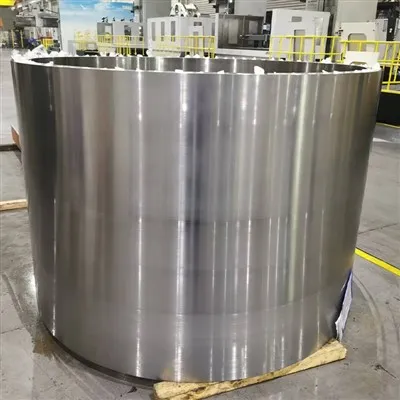
A vacuum chamber is an essential piece of equipment in various industries, including scientific research, manufacturing, and aerospace. It provides a controlled environment where pressure is significantly lower than the atmospheric pressure, allowing for a wide range of applications such as material testing, vacuum coating, and semiconductor manufacturing. As a supplier of Vacuum Chamber, I understand the importance of using the right materials to ensure the performance, durability, and safety of these chambers. In this blog post, I will discuss the different materials commonly used to make a vacuum chamber and their properties.
Metals
Metals are the most commonly used materials for vacuum chambers due to their excellent mechanical strength, thermal conductivity, and vacuum compatibility. Here are some of the metals frequently employed in vacuum chamber construction:
Stainless Steel
Stainless steel is a popular choice for vacuum chambers because of its high corrosion resistance, good mechanical properties, and ease of fabrication. It contains chromium, which forms a passive oxide layer on the surface, protecting the metal from rust and other forms of corrosion. This makes stainless steel suitable for use in harsh environments and applications where the chamber may come into contact with corrosive substances.
There are different grades of stainless steel available, each with its own unique properties. For example, 304 stainless steel is a general-purpose grade that offers good corrosion resistance and is relatively inexpensive. 316 stainless steel, on the other hand, contains molybdenum, which enhances its corrosion resistance, especially in chloride-rich environments. This makes it ideal for applications in the food, pharmaceutical, and marine industries.
Stainless steel vacuum chambers can be fabricated using various methods, such as welding, machining, and forming. Welding is a common technique used to join stainless steel components together, creating a leak-tight seal. Machining is used to create precise features and dimensions, while forming is used to shape the metal into the desired form.
Aluminum
Aluminum is another widely used metal in vacuum chamber construction. It is lightweight, has good thermal conductivity, and is relatively inexpensive compared to stainless steel. Aluminum also has a low outgassing rate, which is important in vacuum applications as it reduces the amount of gas released into the chamber, maintaining a high vacuum level.
Aluminum Alloy Parts Base Plate are commonly used in vacuum chambers due to their high strength-to-weight ratio. Alloys such as 6061 and 7075 are popular choices as they offer good mechanical properties and can be easily machined and welded. However, aluminum is more susceptible to corrosion than stainless steel, so it may require additional surface treatments, such as anodizing, to improve its corrosion resistance.
Copper
Copper is known for its excellent thermal and electrical conductivity, making it a suitable material for vacuum chambers used in applications where heat transfer or electrical conductivity is critical. It is also relatively soft and ductile, which allows for easy machining and forming.
However, copper has a higher outgassing rate than stainless steel and aluminum, which can be a drawback in high-vacuum applications. To reduce outgassing, copper surfaces can be plated with other metals, such as nickel or gold, or treated with special coatings.
Glass
Glass is a transparent material that is often used in vacuum chambers to allow for visual observation of the processes taking place inside. It has good vacuum compatibility, low outgassing rate, and is resistant to many chemicals.
There are different types of glass used in vacuum chamber construction, including borosilicate glass and fused silica. Borosilicate glass, such as Pyrex, is a common choice due to its high thermal resistance and low coefficient of thermal expansion. This makes it suitable for applications where the chamber may be subjected to rapid temperature changes.
Fused silica, on the other hand, has excellent optical properties and is highly resistant to UV radiation. It is often used in applications where high optical clarity and UV resistance are required, such as in semiconductor manufacturing and optical research.
Glass vacuum chambers are typically fabricated by blowing or molding the glass into the desired shape. They can be sealed using various methods, such as O-rings or metal-to-glass seals, to ensure a leak-tight connection.
Ceramics
Ceramics are inorganic, non-metallic materials that offer several advantages in vacuum chamber construction. They have high thermal resistance, excellent electrical insulation properties, and are resistant to corrosion and wear.
Alumina (aluminum oxide) is one of the most commonly used ceramics in vacuum chambers. It has a high melting point, good mechanical strength, and low outgassing rate. Alumina ceramics can be fabricated into various shapes and sizes using techniques such as sintering and machining.
Another ceramic material used in vacuum chambers is zirconia. Zirconia has excellent mechanical properties, high fracture toughness, and good chemical stability. It is often used in applications where high strength and wear resistance are required, such as in vacuum pumps and valves.
Polymers
Polymers are organic materials that can be used in vacuum chambers for various purposes, such as sealing, insulation, and as structural components. They offer several advantages, including low cost, ease of fabrication, and good chemical resistance.


One of the most commonly used polymers in vacuum chambers is polytetrafluoroethylene (PTFE), also known as Teflon. PTFE has a low coefficient of friction, excellent chemical resistance, and is highly resistant to heat and cold. It is often used as a sealing material in vacuum chambers due to its ability to form a tight seal and its resistance to outgassing.
Another polymer used in vacuum chambers is polyether ether ketone (PEEK). PEEK has high mechanical strength, good thermal stability, and excellent chemical resistance. It is often used as a structural component in vacuum chambers due to its ability to withstand high temperatures and pressures.
Conclusion
The choice of materials for a vacuum chamber depends on several factors, including the application requirements, operating conditions, and budget. Metals such as stainless steel, aluminum, and copper are commonly used due to their excellent mechanical properties, thermal conductivity, and vacuum compatibility. Glass is used for visual observation, while ceramics and polymers offer unique properties such as high thermal resistance, electrical insulation, and chemical resistance.
As a supplier of Vacuum Chamber, I can provide high-quality chambers made from a variety of materials to meet your specific needs. Whether you require a chamber for scientific research, manufacturing, or aerospace applications, I have the expertise and experience to deliver a solution that meets your requirements.
If you are interested in purchasing a vacuum chamber or have any questions about the materials used in their construction, please feel free to contact me. I would be happy to discuss your needs and provide you with a customized solution.
References
- "Vacuum Technology: A Practical Guide" by A. Roth
- "Handbook of Vacuum Physics" by D. O'Hanlon
- "Materials Science and Engineering: An Introduction" by W. Callister