

Hey there! I'm a supplier of cast carbon steel parts, and today I want to chat about the replacement criteria for these parts. Cast carbon steel parts are used in a wide range of industries, from automotive to aerospace, and knowing when to replace them is crucial for maintaining the efficiency and safety of your equipment.
1. Wear and Tear
One of the most common reasons to replace cast carbon steel parts is wear and tear. Over time, these parts are subjected to friction, abrasion, and impact, which can cause them to degrade. For example, in a manufacturing setting, a cast carbon steel gear might be constantly meshing with other gears, leading to tooth wear. If the wear is significant, it can affect the gear's performance, causing noise, vibration, and even mechanical failure.
As a rule of thumb, if the wear exceeds a certain percentage of the part's original dimensions, it's time to consider replacement. Usually, when the wear reaches around 10 - 15% of the critical dimension, the part's functionality can be compromised. For instance, if a shaft has a diameter of 50 mm and the wear on its surface has reduced the diameter by 5 - 7.5 mm, it's likely time for a new one.
2. Cracks and Fractures
Cracks and fractures are serious issues that can lead to sudden and catastrophic failure of cast carbon steel parts. These can be caused by various factors, such as excessive stress, fatigue, or improper heat treatment during the manufacturing process. Even a small crack can propagate under load, eventually causing the part to break apart.
Visual inspection is a key method to detect cracks. Regularly checking parts for surface cracks using methods like magnetic particle inspection or liquid penetrant inspection can help catch problems early. If a crack is detected, especially if it's on a critical load - bearing area, the part should be replaced immediately. For example, in a Large Steel Casting Box, a crack in the wall could lead to structural instability and potential collapse.
3. Corrosion
Corrosion is another major factor that can affect the integrity of cast carbon steel parts. Carbon steel is prone to rusting when exposed to moisture and oxygen. In a marine environment or in a chemical plant, the rate of corrosion can be quite high.
Corrosion can weaken the part by reducing its cross - sectional area and causing pitting on the surface. If the corrosion has penetrated deeply into the part or has caused significant loss of material, replacement is necessary. A simple way to assess corrosion is by measuring the remaining wall thickness of a part. If the wall thickness has been reduced by more than 20 - 30% due to corrosion, it's a strong indication for replacement. For example, in a Large Steel Casting Shell Cast Steel Joint used in a coastal area, corrosion can eat away at the joint, compromising its strength.
4. Changes in Material Properties
The material properties of cast carbon steel can change over time due to factors like temperature, stress, and chemical exposure. For example, high - temperature environments can cause the steel to lose its hardness and strength. If a part is operating in a high - temperature application, such as in a Large Turbine Housings, the repeated heating and cooling cycles can lead to creep, which is a slow deformation of the material under constant stress.
Regular material testing, such as hardness testing and tensile testing, can help monitor these changes. If the material properties deviate significantly from the original specifications, it might be time to replace the part. For instance, if the hardness of a cast carbon steel part has dropped by more than 10% of its original value, it could affect its wear resistance and overall performance.
5. Compatibility with New Systems or Upgrades
Sometimes, the need to replace cast carbon steel parts arises from the desire to upgrade or modify an existing system. If you're upgrading a machine to improve its performance or efficiency, the old cast carbon steel parts might not be compatible with the new components.
For example, if you're installing a more powerful motor in a machine, the existing cast carbon steel gears might not be able to handle the increased torque. In such cases, you'll need to replace these parts with ones that are designed to work with the new system.
6. Fatigue
Fatigue is a common problem in parts that are subjected to cyclic loading. Every time a part is loaded and unloaded, microscopic damage occurs in the material. Over time, these small damages accumulate, leading to fatigue failure.

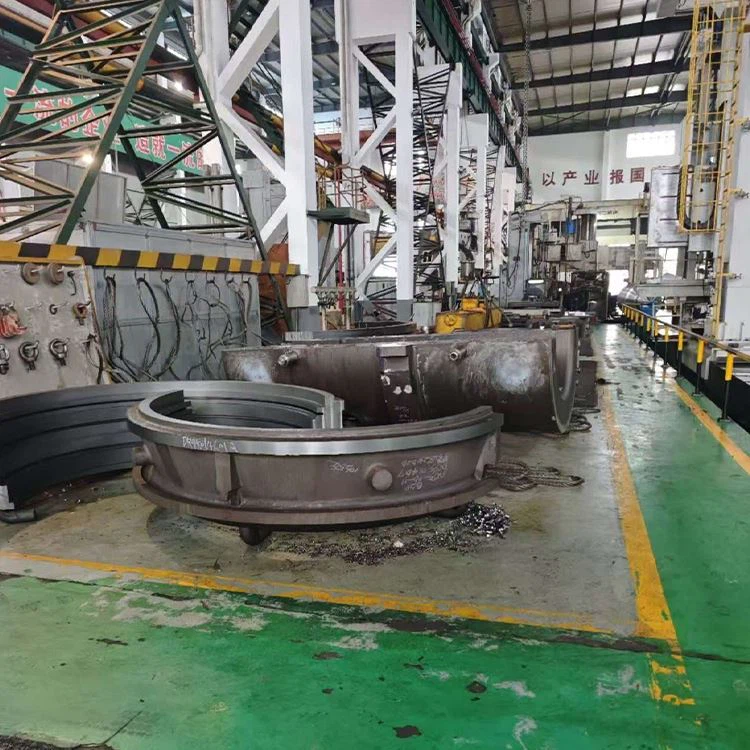
The number of loading cycles a part can withstand before fatigue failure depends on various factors, such as the stress level, the geometry of the part, and the material quality. Manufacturers usually provide fatigue life estimates for their parts. If a part has reached or exceeded its estimated fatigue life, it's advisable to replace it. For example, in a rotating shaft that experiences cyclic bending loads, fatigue can cause cracks to form at the stress - concentration points, eventually leading to shaft breakage.
Conclusion
In conclusion, there are several criteria to consider when deciding whether to replace cast carbon steel parts. Wear and tear, cracks and fractures, corrosion, changes in material properties, compatibility issues, and fatigue are all important factors. Regular inspection, testing, and monitoring of these parts are essential to ensure the safety and efficiency of your equipment.
If you're in the market for high - quality cast carbon steel parts or need advice on replacement, don't hesitate to reach out. I'm here to help you find the right solutions for your specific needs. Whether you need a Large Steel Casting Box, a Large Steel Casting Shell Cast Steel Joint, or Large Turbine Housings, I can provide you with top - notch products. Let's have a chat about your requirements and get you the best parts for your operations.
References
- Metals Handbook: Properties and Selection: Irons and Steels, ASM International
- ASTM Standards on Steel Castings
- Machinery's Handbook, Industrial Press Inc.


