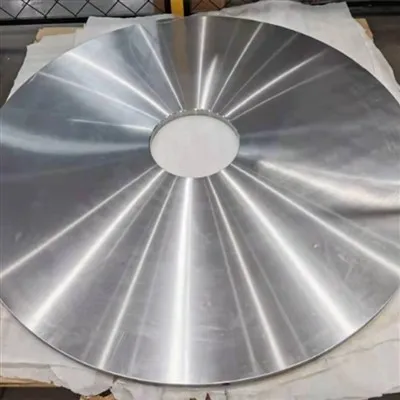
As a supplier of grey cast iron parts, ensuring the quality of our products before delivery is of utmost importance. Grey cast iron parts are widely used in various industries due to their excellent properties such as good castability, high wear resistance, and damping capacity. To guarantee that our customers receive high - quality grey cast iron parts, we have established a comprehensive inspection procedure. This blog post will detail these inspection steps to give our potential customers a clear understanding of the quality control measures we implement.
1. Dimensional Inspection
The first step in our inspection process is to check the dimensions of the grey cast iron parts. Precise dimensions are crucial as they determine whether the parts can fit properly into the intended assemblies. We use a variety of measuring tools, including calipers, micrometers, and coordinate measuring machines (CMMs).
Calipers are used for quick and relatively simple measurements of external and internal diameters, lengths, and widths. Micrometers, on the other hand, provide more accurate measurements, especially for small - sized features. For complex geometries and parts with high - precision requirements, we rely on CMMs. A CMM can measure multiple points on a part's surface with extremely high accuracy, enabling us to verify that the part conforms to the design specifications. For example, when inspecting a Grey Cast Iron Body, we use a CMM to ensure that all the holes, bosses, and mating surfaces have the correct dimensions and positions.
2. Visual Inspection
Visual inspection is a fundamental and initial step in the quality control process. Our experienced inspectors examine the parts carefully under proper lighting conditions to detect any visible defects. Surface defects such as cracks, porosity, sand inclusions, and blowholes can significantly affect the performance and durability of the grey cast iron parts.
Cracks can propagate under stress, leading to part failure. Porosity, which appears as small holes on the surface or within the part, can reduce the strength and corrosion resistance. Sand inclusions are particles of sand that become embedded in the casting during the manufacturing process, and they can cause uneven wear and premature failure. Blowholes are formed due to the entrapment of gas during solidification, and they can also compromise the integrity of the part.
During the visual inspection of a High Quality Grey Cast Iron Flange, our inspectors look for these surface defects around the bolt holes, the sealing surface, and the outer edge of the flange. Any parts with visible defects are immediately flagged for further evaluation or rejection.
3. Material Analysis
To ensure that the grey cast iron parts are made of the correct material and have the desired chemical composition, we conduct material analysis. The chemical composition of grey cast iron has a significant impact on its mechanical properties, such as strength, hardness, and ductility.
We use methods like optical emission spectroscopy (OES) to determine the elemental composition of the grey cast iron. OES works by exciting the atoms in the sample with a high - energy spark, causing them to emit light at specific wavelengths. By analyzing the emitted light, we can accurately measure the concentrations of various elements, including carbon, silicon, manganese, sulfur, and phosphorus.
For instance, carbon is a key element in grey cast iron as it affects the graphite structure and the mechanical properties. Silicon promotes the formation of graphite and improves the castability. Manganese helps to control the formation of carbides and enhances the strength. Sulfur and phosphorus are usually kept at low levels as they can have a negative impact on the mechanical properties. By ensuring that the chemical composition of our Y502.11.7 - 1A Connecting Sleeve meets the specified requirements, we can guarantee its performance and reliability.
4. Hardness Testing
Hardness is an important mechanical property of grey cast iron parts as it is related to their wear resistance and strength. We perform hardness testing on our parts to ensure that they have the appropriate hardness values.
There are several methods for hardness testing, but the most commonly used method in our inspection process is the Brinell hardness test. In the Brinell hardness test, a hardened steel ball is pressed into the surface of the part under a specific load for a certain period of time. The diameter of the indentation left on the surface is then measured, and the Brinell hardness number (BHN) is calculated based on the load and the diameter of the indentation.
We typically test the hardness at multiple locations on the part to ensure uniformity. For example, when inspecting a large - sized grey cast iron part, we may test the hardness at the center, the edges, and other critical areas. If the hardness values deviate from the specified range, it may indicate problems with the heat treatment process or the chemical composition of the material.
5. Non - Destructive Testing (NDT)
Non - destructive testing techniques are used to detect internal defects in the grey cast iron parts without damaging them. These techniques are especially useful for detecting hidden cracks, porosity, and other internal flaws that may not be visible during visual inspection.
One of the most commonly used NDT methods in our inspection process is ultrasonic testing (UT). In ultrasonic testing, high - frequency sound waves are transmitted into the part, and the reflections of these waves are analyzed to detect any internal defects. If there is a defect in the part, such as a crack or a large - scale porosity, the sound waves will be reflected differently, and the inspector can identify the location and size of the defect based on the reflected signals.
Another NDT method we use is magnetic particle testing (MPT), which is suitable for detecting surface and near - surface defects in ferromagnetic materials like grey cast iron. In MPT, a magnetic field is applied to the part, and magnetic particles are then applied to the surface. If there is a defect, the magnetic field will be distorted, and the magnetic particles will accumulate at the defect site, making it visible to the inspector.
6. Functional Testing
In addition to the above - mentioned inspections, we also conduct functional testing for some grey cast iron parts, especially those that are used in critical applications. Functional testing is designed to ensure that the parts can perform their intended functions under real - world conditions.
For example, if we are supplying grey cast iron valve bodies, we will test the valves for their sealing performance, flow characteristics, and pressure - resistance. We use specialized testing equipment to simulate the operating conditions and measure the relevant parameters. If the parts fail to meet the functional requirements, they will be re - evaluated and may be subject to re - work or rejection.
Conclusion
Our comprehensive inspection procedures for grey cast iron parts before delivery are designed to ensure that our customers receive high - quality products that meet their specifications and requirements. By combining dimensional inspection, visual inspection, material analysis, hardness testing, non - destructive testing, and functional testing, we can effectively detect and eliminate any potential quality issues.
We understand that the quality of grey cast iron parts is crucial for the performance and reliability of our customers' products. Therefore, we are committed to maintaining the highest standards of quality control throughout the manufacturing and inspection processes.

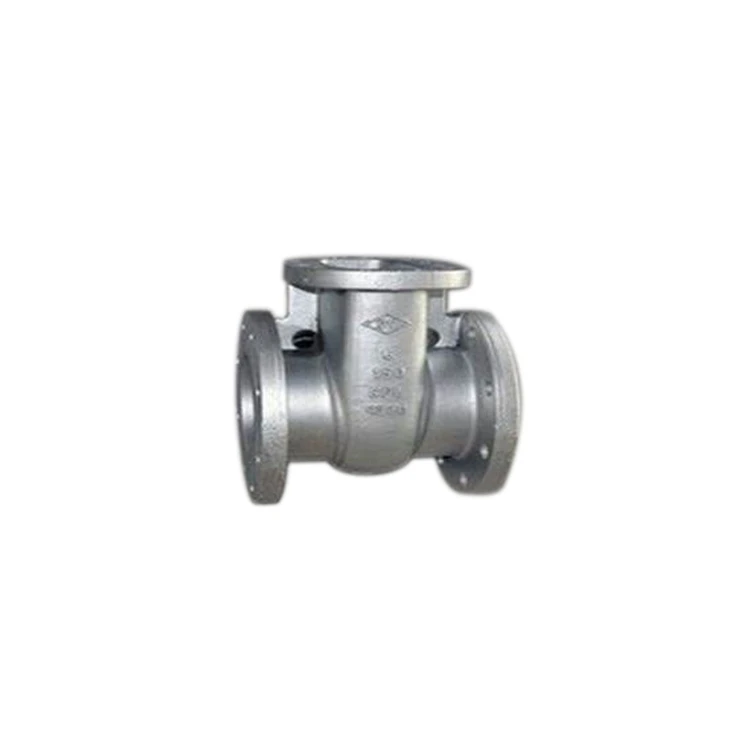
If you are interested in our grey cast iron parts or have any questions about our inspection procedures, please feel free to contact us for procurement discussions. We look forward to the opportunity to work with you and provide you with the best - quality grey cast iron parts.
References
- "Foundry Technology Handbook" by ASM International
- "Materials Science and Engineering: An Introduction" by William D. Callister Jr. and David G. Rethwisch
- Industry standards and guidelines related to grey cast iron manufacturing and inspection.