

Hey there! As a supplier of ductile iron parts, I've had my fair share of experiences when it comes to machining these parts. Ductile iron, also known as nodular or spheroidal graphite iron, is a type of cast iron with graphite nodules that give it enhanced ductility and toughness compared to traditional cast iron. But the big question is, what are the cutting tools suitable for machining ductile iron parts? Let's dive in and find out.
Understanding Ductile Iron
Before we talk about the cutting tools, it's important to understand the characteristics of ductile iron. Ductile iron has high strength, good wear resistance, and excellent machinability. However, it can also be quite abrasive, which means the cutting tools need to be able to withstand the wear and tear. The graphite nodules in ductile iron can cause chipping and breakage of the cutting tools if not handled properly. So, choosing the right cutting tools is crucial for efficient and high - quality machining.
Carbide Cutting Tools
Carbide cutting tools are a popular choice for machining ductile iron parts. They are made of tungsten carbide, which is extremely hard and wear - resistant. Carbide tools can maintain their cutting edge for a long time, even when machining abrasive materials like ductile iron.
- Solid Carbide End Mills: These are great for roughing and finishing operations on ductile iron parts. They can handle high cutting speeds and feeds, which helps to increase productivity. For example, when machining a Ductile Iron Casting Gearbox, solid carbide end mills can quickly remove large amounts of material during the roughing stage and then provide a smooth finish in the final pass.
- Carbide Inserts: Carbide inserts are used in turning, milling, and boring operations. They come in various shapes and geometries, such as square, triangular, and round. The advantage of using carbide inserts is that they can be easily replaced when they become worn out, which reduces downtime. When machining a Fan Body, carbide inserts can be used to achieve precise dimensions and a good surface finish.
Ceramic Cutting Tools
Ceramic cutting tools are another option for machining ductile iron. They are even harder than carbide tools and can withstand higher cutting temperatures. This makes them suitable for high - speed machining of ductile iron parts.
- Alumina - Based Ceramics: These ceramics are known for their high hardness and chemical stability. They can be used for finish turning and milling of ductile iron. However, they are more brittle than carbide tools, so they need to be used with caution. When machining a Cutting Chamber Body, alumina - based ceramic tools can provide a very smooth surface finish at high cutting speeds.
- Silicon Nitride - Based Ceramics: Silicon nitride - based ceramics have better toughness compared to alumina - based ceramics. They can be used for both roughing and finishing operations on ductile iron. They are also resistant to thermal shock, which is an important property when machining materials that generate a lot of heat.
Cubic Boron Nitride (CBN) Cutting Tools
Cubic Boron Nitride (CBN) cutting tools are the top - of - the - line choice for machining ductile iron parts. CBN is extremely hard, second only to diamond. It has excellent wear resistance and can maintain its cutting edge even under high - pressure and high - temperature conditions.
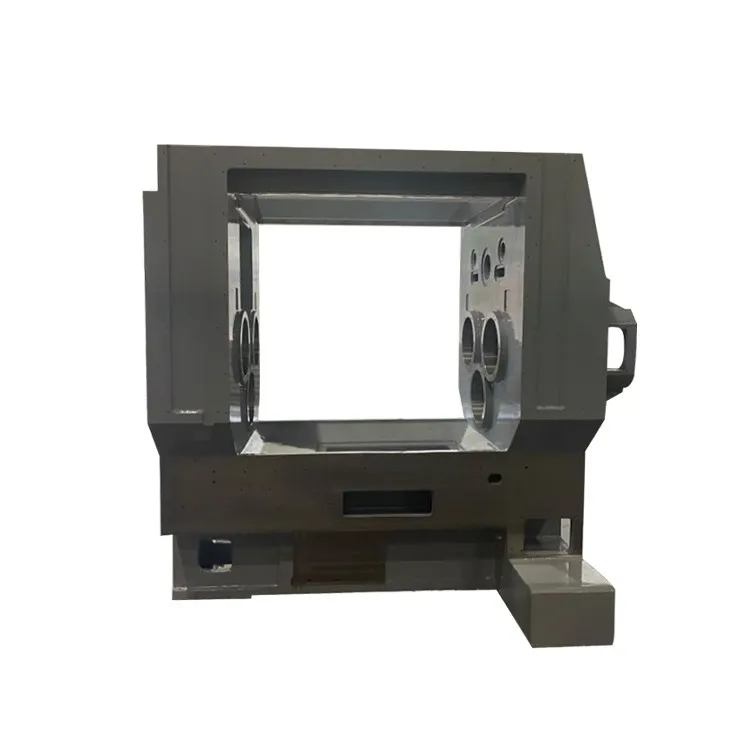

- CBN Inserts: CBN inserts are commonly used in high - speed turning and milling of ductile iron. They can achieve very high cutting speeds, which significantly reduces machining time. For example, in mass production of ductile iron parts, CBN inserts can increase productivity and reduce costs. However, CBN tools are quite expensive, so they are usually used for high - precision and high - volume machining operations.
High - Speed Steel (HSS) Cutting Tools
High - Speed Steel (HSS) cutting tools are a more traditional option for machining ductile iron. They are less expensive than carbide, ceramic, and CBN tools.
- HSS Drills and Reamers: HSS drills and reamers are often used for drilling and finishing holes in ductile iron parts. They are easy to sharpen and can provide a good surface finish in small - scale machining operations. However, they have lower wear resistance compared to carbide and other advanced cutting tools, so they may need to be replaced more frequently.
Factors to Consider When Choosing Cutting Tools
When choosing cutting tools for machining ductile iron parts, there are several factors to consider:
- Machining Operation: Different machining operations, such as turning, milling, drilling, and boring, require different types of cutting tools. For example, turning operations may require carbide inserts or CBN inserts, while drilling operations may use HSS drills or carbide drills.
- Part Geometry: The shape and size of the ductile iron part also play a role in tool selection. Complex geometries may require special - shaped cutting tools to access all the areas of the part.
- Production Volume: For high - volume production, more expensive but long - lasting cutting tools like CBN inserts may be more cost - effective in the long run. For low - volume production, HSS or carbide tools may be a better choice.
- Surface Finish Requirements: If a high - quality surface finish is required, ceramic or CBN cutting tools may be necessary. They can provide a smoother surface compared to HSS or some carbide tools.
Tips for Machining Ductile Iron Parts
- Use Coolant: Using a coolant during machining can help to reduce heat and friction, which extends the life of the cutting tools. It also helps to flush away the chips, preventing them from causing damage to the cutting edge.
- Proper Tool Setup: Make sure the cutting tools are properly installed and aligned. A misaligned tool can cause uneven wear and poor surface finish.
- Monitor Tool Wear: Regularly check the cutting tools for wear and replace them when necessary. This ensures consistent quality and productivity.
Conclusion
In conclusion, there are several cutting tools suitable for machining ductile iron parts, each with its own advantages and disadvantages. Carbide, ceramic, CBN, and HSS cutting tools all have their place in the machining process, depending on the specific requirements of the job. As a ductile iron parts supplier, I've seen firsthand how the right cutting tools can make a big difference in the quality and efficiency of the machining process.
If you're in the market for ductile iron parts or have questions about the machining process, feel free to reach out for a chat. We can discuss your specific needs and find the best solutions for your projects. Let's work together to get the job done right!
References
- Jones, R. A. (2018). Machining of Metals: An Introduction to the Mechanics of Cutting and Grinding. Industrial Press Inc.
- Kalpakjian, S., & Schmid, S. R. (2014). Manufacturing Engineering and Technology. Pearson.


