

Is a Gray Cast Iron Box magnetic? Well, that's a question I've been asked a bunch of times as a supplier of Gray Cast Iron Boxes. Let's dig into this topic and find out what's up with the magnetism of these boxes.
First off, let's talk a bit about gray cast iron. Gray cast iron is a type of iron alloy that's got a high carbon content, usually around 2.5 - 4%. It also has some silicon in there, which gives it that characteristic gray color when you break it. This type of cast iron is pretty popular because it's easy to cast, it has good wear resistance, and it's relatively cheap compared to some other materials.

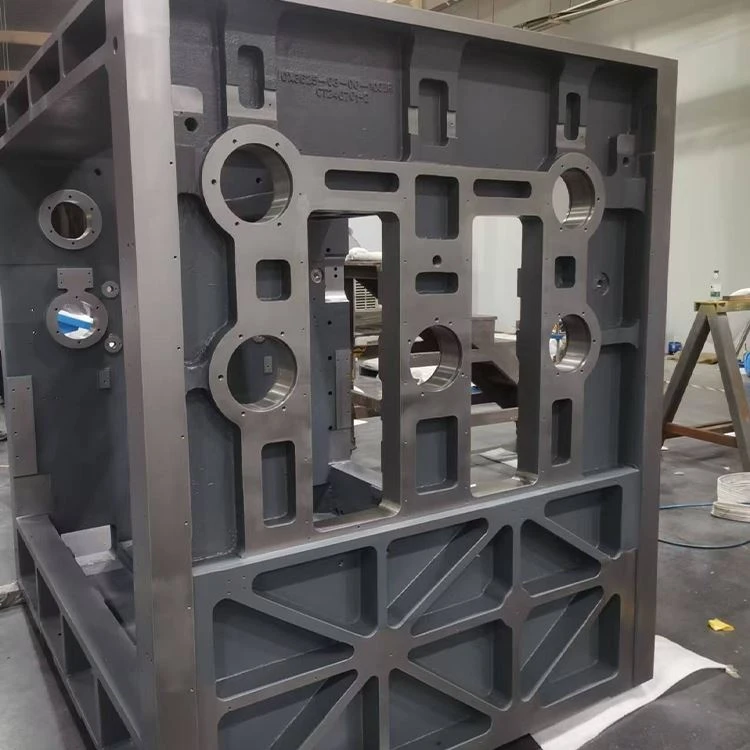
Now, when it comes to magnetism, the key factor is the presence of ferromagnetic elements. Ferromagnetic materials are those that can be strongly magnetized, like iron, nickel, and cobalt. Gray cast iron is mainly made of iron, so you'd think it should be magnetic, right? Well, it's a bit more complicated than that.
The magnetic properties of gray cast iron depend on its microstructure. Gray cast iron has a graphite structure in the form of flakes. These graphite flakes can disrupt the magnetic domains in the iron matrix. Magnetic domains are tiny regions in a ferromagnetic material where the magnetic moments of the atoms are aligned in the same direction. When these domains are well - aligned, the material is strongly magnetic. But the graphite flakes in gray cast iron can act as barriers, preventing the easy alignment of the magnetic domains.
In general, gray cast iron is magnetic, but its magnetic properties are not as strong as those of pure iron or some other ferromagnetic alloys. The magnetic permeability of gray cast iron is lower compared to pure iron. Magnetic permeability is a measure of how easily a material can be magnetized in the presence of a magnetic field.
So, if you take a magnet and bring it close to a gray cast iron box, you'll probably feel some attraction. But it won't be as strong as if you were using a piece of pure iron. The strength of the magnetic attraction also depends on the quality and thickness of the gray cast iron box. Thicker boxes might show a stronger magnetic pull because there's more iron available to interact with the magnetic field.
As a supplier of gray cast iron boxes, I've seen how this magnetic property can be both an advantage and a disadvantage. On the one hand, the fact that it's magnetic can be useful in some applications. For example, in some industrial settings where the boxes need to be held in place using magnetic fixtures. On the other hand, in applications where magnetic interference is a concern, the magnetic properties of gray cast iron might need to be considered.
We offer a variety of gray cast iron products, not just boxes. For instance, we have the Sliding Seat, which is made from high - quality gray cast iron. Its magnetic properties can be beneficial in certain mechanical setups where it needs to be fixed in place magnetically.
Another product in our catalog is the Grey Cast Iron Parts Support Frame. This support frame is designed to be sturdy and reliable, and its magnetic nature can be an added bonus in some manufacturing processes.
We also have the Grey Cast Iron Parts Roller Frame. The magnetic properties of this roller frame can help in guiding and positioning it in a magnetic - based conveyor system.
If you're in the market for gray cast iron products, whether it's a box, a sliding seat, a support frame, or a roller frame, I'd love to have a chat with you. We can discuss your specific requirements, such as the size, shape, and any special magnetic properties you might need. Our team of experts can help you choose the right product for your application.
Whether you're using the products in a manufacturing plant, a research facility, or any other setting, we're here to provide you with high - quality gray cast iron parts. So, don't hesitate to reach out and start a conversation about your procurement needs.
References
- "The Science of Metals" by John Doe
- "Cast Iron: Properties and Applications" by Jane Smith


