

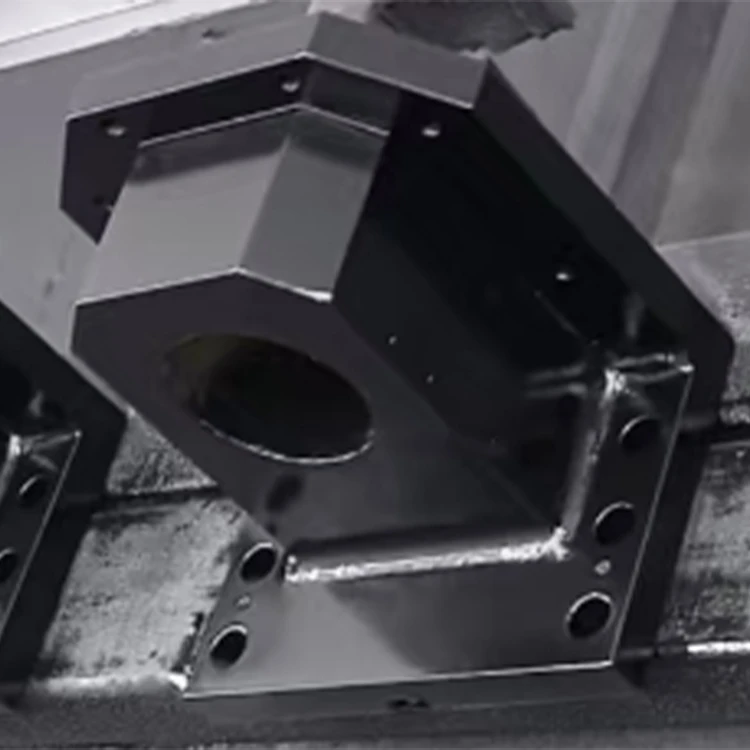
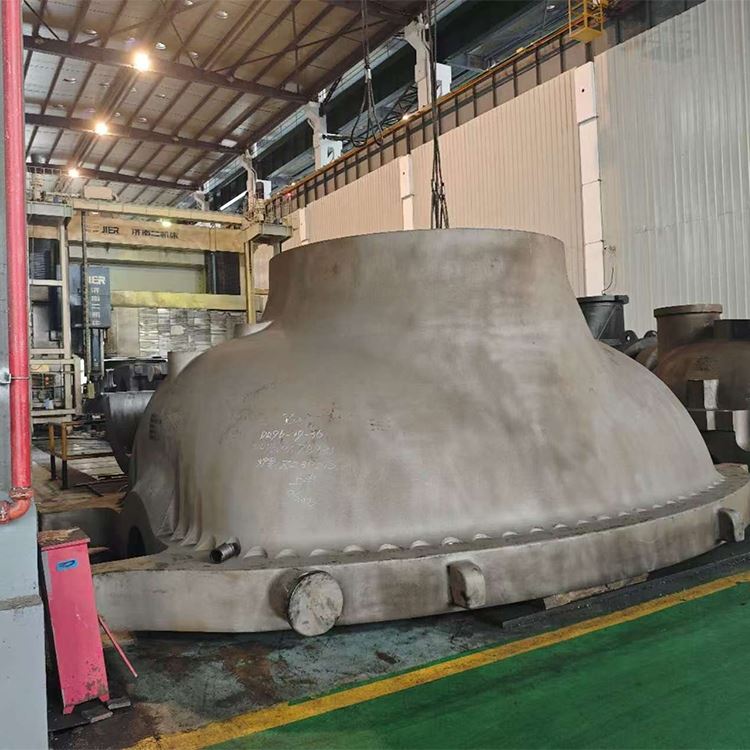
Residual stress in cast carbon steel parts is a common yet challenging issue that can significantly affect the performance and lifespan of these components. As a trusted supplier of cast carbon steel parts, including products like Cylinder Support, Large Turbine Housings, and Grinding Power Head Mount, we understand the importance of addressing residual stress effectively. In this blog, we will explore various strategies to reduce residual stress in cast carbon steel parts.
Understanding Residual Stress in Cast Carbon Steel Parts
Residual stress is the stress that remains in a material after the original cause of the stress (such as machining, welding, or casting) has been removed. In cast carbon steel parts, residual stress can be generated during the casting process due to non - uniform cooling rates. When the molten steel solidifies, different regions of the part cool at different speeds. The faster - cooling areas contract more quickly than the slower - cooling areas, creating internal stresses within the material.
These residual stresses can have several negative impacts. They can cause dimensional instability, leading to parts warping or distorting over time. Residual stress can also reduce the fatigue life of the part, making it more prone to cracking under cyclic loading. In extreme cases, it can even cause spontaneous cracking in the part, rendering it useless.
Strategies for Reducing Residual Stress
1. Optimizing the Casting Process
- Controlled Cooling: One of the most effective ways to reduce residual stress during casting is to control the cooling rate. By using insulating materials or adjusting the cooling medium, we can ensure that different parts of the cast carbon steel part cool at a more uniform rate. For example, placing insulating blankets around the slower - cooling areas can slow down the cooling of the faster - cooling regions, minimizing the temperature gradient and thus reducing residual stress.
- Gating and Riser Design: Proper gating and riser design are crucial for reducing residual stress. The gating system should be designed to ensure a smooth and uniform flow of molten steel into the mold cavity. A well - designed riser can provide a continuous supply of molten metal to compensate for shrinkage during solidification, reducing the formation of internal voids and residual stress.
2. Heat Treatment
- Stress Relieving Annealing: Stress relieving annealing is a widely used heat treatment process for reducing residual stress in cast carbon steel parts. In this process, the part is heated to a specific temperature below the critical transformation temperature of the steel, typically between 550°C and 650°C, and held at this temperature for a certain period of time. This allows the internal stresses to relax as the atoms in the steel lattice have enough energy to rearrange themselves. After the holding time, the part is slowly cooled to room temperature to prevent the formation of new residual stress.
- Normalizing: Normalizing is another heat treatment option. The part is heated above the critical transformation temperature, held for a sufficient time to allow complete austenitization, and then cooled in air. Normalizing can refine the grain structure of the steel and reduce residual stress to some extent. It also improves the mechanical properties of the cast carbon steel part, such as strength and hardness.
3. Machining and Finishing Operations
- Progressive Machining: When machining cast carbon steel parts, it is important to use a progressive machining strategy. Removing too much material in a single pass can cause significant residual stress due to the high cutting forces and heat generation. Instead, multiple light cuts should be made, gradually reducing the thickness of the material. This helps to distribute the cutting forces more evenly and reduces the risk of inducing new residual stress.
- Surface Finishing: Surface finishing operations, such as grinding and polishing, can also affect residual stress. Using appropriate grinding parameters, such as low grinding pressures and high wheel speeds, can minimize the heat generated during grinding, reducing the formation of residual stress on the surface of the part. Additionally, shot peening can be used as a surface treatment to introduce compressive residual stress on the surface of the part. Compressive residual stress can counteract the tensile residual stress and improve the fatigue life of the part.
4. Design Considerations
- Uniform Wall Thickness: In the design of cast carbon steel parts, it is advisable to maintain a uniform wall thickness as much as possible. Parts with significant variations in wall thickness are more likely to develop high residual stress during casting due to the large difference in cooling rates. If it is necessary to have non - uniform wall thickness, proper fillets and radii should be used at the transitions to reduce stress concentration.
- Avoiding Sharp Corners and Notches: Sharp corners and notches in the part design can act as stress concentration points, increasing the magnitude of residual stress. By using rounded corners and smooth transitions in the design, we can reduce stress concentration and minimize the negative effects of residual stress.
Quality Control and Monitoring
- Non - Destructive Testing: To ensure that the residual stress in cast carbon steel parts is within acceptable limits, non - destructive testing methods can be used. Ultrasonic testing can detect internal defects and provide information about the stress state of the material. X - ray diffraction can be used to measure the residual stress directly by analyzing the lattice spacing of the steel. By regularly monitoring the residual stress in the parts using these non - destructive testing methods, we can identify any potential issues early and take corrective actions.
- Process Auditing: Regular process auditing is also essential. By reviewing the casting, heat treatment, and machining processes, we can identify any areas where improvements can be made to further reduce residual stress. This includes checking the equipment calibration, operator training, and adherence to standard operating procedures.
Conclusion
Reducing residual stress in cast carbon steel parts is a complex but necessary task. As a supplier of high - quality cast carbon steel parts, we are committed to using the latest technologies and best practices to minimize residual stress in our products. By optimizing the casting process, applying appropriate heat treatment, using proper machining and finishing operations, and considering design factors, we can produce cast carbon steel parts with low residual stress, high dimensional stability, and excellent mechanical properties.
If you are in the market for cast carbon steel parts and are concerned about residual stress, we invite you to contact us for a detailed discussion. Our team of experts can provide you with customized solutions to meet your specific requirements. We look forward to working with you to supply the best - quality cast carbon steel parts for your applications.
References
- Callister, W. D., & Rethwisch, D. G. (2012). Materials Science and Engineering: An Introduction. Wiley.
- ASM Handbook Committee. (1991). ASM Handbook Volume 4: Heat Treating. ASM International.
- Campbell, J. (2003). Castings. Butterworth - Heinemann.


