

As a supplier of Large Turbine Housings, I've witnessed firsthand the critical role these components play in the energy and industrial sectors. Turbine housings are designed to endure extreme conditions, including high temperatures, pressures, and mechanical stresses. In this blog, I'll share some strategies on how to optimize the cost - performance ratio of large turbine housings.
Understanding the Cost - Performance Ratio
The cost - performance ratio is a measure that evaluates the relationship between the cost of a product and its performance. In the context of large turbine housings, a high cost - performance ratio means getting the best possible performance at the lowest cost. Performance can be measured in terms of durability, efficiency, and reliability, while cost includes not only the initial purchase price but also maintenance, operation, and replacement costs over the product's lifespan.
Material Selection
One of the most significant factors affecting the cost - performance ratio of large turbine housings is material selection. The right material can enhance performance while keeping costs in check.
High - Quality Steel Alloys
Steel alloys are commonly used for turbine housings due to their excellent mechanical properties, such as high strength, toughness, and corrosion resistance. For instance, low - alloy steels can provide a good balance between cost and performance. They offer sufficient strength for most turbine applications and are relatively inexpensive compared to high - end alloys.
However, for more demanding applications where the turbine operates at extremely high temperatures or pressures, high - nickel or high - chromium alloys may be necessary. These alloys offer superior heat and corrosion resistance but come at a higher cost. As a supplier, we offer a range of Large Turbine Housings made from different steel alloys to meet the diverse needs of our customers.
Casting vs. Forging
The manufacturing process also impacts the cost and performance of turbine housings. Casting is a common method for producing large turbine housings as it allows for complex shapes to be formed. However, cast parts may have some internal defects, such as porosity, which can affect their mechanical properties.
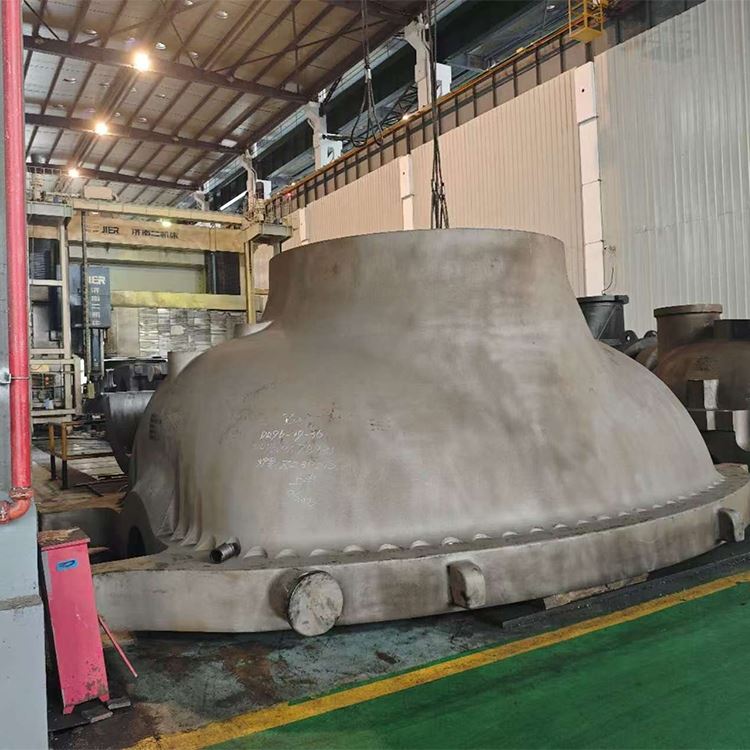
Forging, on the other hand, involves shaping the metal by applying compressive forces. Forged parts generally have better mechanical properties, such as higher strength and fatigue resistance, but the forging process is more expensive. We carefully consider the specific requirements of each project to determine whether casting or forging is the most cost - effective option. In some cases, we may even combine both processes to achieve the desired performance at a reasonable cost. For example, we can use casting for the main body of the turbine housing and forging for critical components like Connecting Flange to enhance the overall performance.

Design Optimization
The design of the turbine housing can significantly impact its cost - performance ratio. A well - designed housing can improve efficiency, reduce maintenance requirements, and lower production costs.
Aerodynamic Design
An aerodynamic design can improve the efficiency of the turbine by reducing air resistance and improving the flow of the working fluid. By optimizing the shape of the housing, we can increase the power output of the turbine while reducing fuel consumption. This not only improves the performance but also reduces the long - term operating costs.
Modular Design
Modular design allows for easier assembly, disassembly, and maintenance of the turbine housing. Instead of a single large - piece housing, we can design the housing in modules that can be easily replaced or repaired. This reduces the downtime of the turbine during maintenance and lowers the overall maintenance costs. Additionally, modular design can also reduce the production cost as it allows for more efficient manufacturing processes.
Quality Control
Ensuring high - quality manufacturing is essential for optimizing the cost - performance ratio of large turbine housings. Quality control measures can help identify and correct any defects early in the production process, reducing the risk of costly failures during operation.
Non - Destructive Testing
We use non - destructive testing methods, such as ultrasonic testing, magnetic particle testing, and radiographic testing, to detect internal and surface defects in the turbine housing. These tests allow us to ensure that the housing meets the required quality standards without damaging the part. By detecting and correcting defects early, we can avoid costly rework and ensure the long - term reliability of the turbine housing.
Quality Assurance Systems
Implementing a comprehensive quality assurance system is crucial for maintaining consistent quality. Our company adheres to international quality standards, such as ISO 9001, to ensure that every turbine housing we produce meets the highest quality requirements. This not only gives our customers confidence in the performance of our products but also helps to reduce the overall cost by minimizing the risk of product failures and returns.
Long - Term Maintenance Planning
A well - thought - out long - term maintenance plan can also contribute to optimizing the cost - performance ratio of large turbine housings. By understanding the expected lifespan of the housing and its components, we can schedule regular maintenance and replacement activities to prevent unexpected breakdowns.
Predictive Maintenance
Predictive maintenance uses data analytics and condition monitoring techniques to predict when maintenance is required. By monitoring parameters such as temperature, vibration, and pressure, we can detect early signs of wear or damage and schedule maintenance before a major failure occurs. This reduces the downtime of the turbine and lowers the maintenance costs.
Spare Parts Management
Maintaining an inventory of spare parts is essential for minimizing the downtime of the turbine during maintenance. We offer a range of spare parts for our Large Turbine Housings, including Large Steel Casting Shell Cast Steel Joint and Connecting Flange. Our efficient spare parts management system ensures that the right parts are available when needed, reducing the lead time for repairs.
Conclusion
Optimizing the cost - performance ratio of large turbine housings requires a comprehensive approach that considers material selection, design optimization, quality control, and long - term maintenance planning. As a supplier of Large Turbine Housings, we are committed to providing our customers with high - quality products that offer the best possible cost - performance ratio.
If you are in the market for large turbine housings or have any questions about optimizing the cost - performance ratio of your turbine system, we invite you to contact us for a detailed discussion. Our team of experts is ready to assist you in finding the most suitable solutions for your specific needs.
References
- ASM Handbook, Volume 1: Properties and Selection: Irons, Steels, and High - Performance Alloys.
- Turbine Technology: Principles and Practices, by A. J. Smalley.
- ISO 9001:2015 Quality Management Systems - Requirements.


