

Hey there! As a support plate supplier, I've seen firsthand how important it is for these plates to last. Durability isn't just a nice-to-have; it's a must for ensuring the long - term performance of any equipment they're part of. So, let's dive into some practical ways to improve the durability of a support plate.
Material Selection
The very first step in making a durable support plate is choosing the right material. Different materials have different properties, and picking the one that suits your specific application is key.
One great option is aluminum alloy. Aluminum alloys like 7075, 6061, 5083, and Ly12 are popular choices. They're lightweight, which can be a huge advantage in applications where weight matters. But don't let their lightness fool you; they're also quite strong. For example, 7075 aluminum alloy is known for its high strength - to - weight ratio, making it perfect for support plates that need to withstand heavy loads.
If you're dealing with an application where reducing capacitance is important, you might want to check out our Capacitance Reducing Plate. These plates are made from carefully selected aluminum alloys to provide both durability and the desired electrical properties.
Heat Treatment
Once you've chosen the right material, heat treatment can significantly enhance the durability of your support plate. Heat treatment is a process that involves heating and cooling the metal in a controlled way to change its physical and mechanical properties.
For aluminum alloys, solution heat treatment followed by aging is a common method. Solution heat treatment involves heating the alloy to a specific temperature and holding it there for a certain period to dissolve all the alloying elements in the solid solution. Then, rapid cooling "freezes" this homogeneous structure. Aging, which can be either natural or artificial, allows the alloying elements to precipitate out in a controlled manner, strengthening the material.
This process can increase the hardness, strength, and wear resistance of the support plate. So, if you want your support plate to last longer, don't skip the heat treatment step.
Surface Finishing
The surface of a support plate can have a big impact on its durability. A good surface finish can protect the plate from corrosion, wear, and other forms of damage.
One popular surface finishing method is anodizing. Anodizing creates a protective oxide layer on the surface of the aluminum alloy. This layer is not only hard and wear - resistant but also provides excellent corrosion protection. It can also be dyed in different colors, giving your support plate an aesthetically pleasing look.
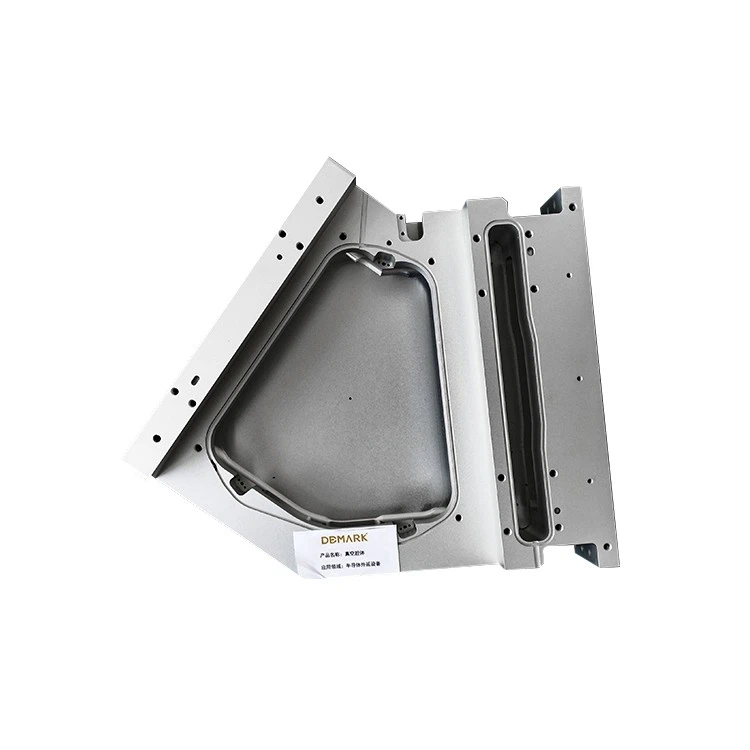

Another option is powder coating. Powder coating involves applying a dry powder to the surface of the plate and then baking it to form a hard, durable finish. It can provide a thick, uniform coating that resists chipping, scratching, and fading.
Design Optimization
The design of the support plate also plays a crucial role in its durability. A well - designed support plate distributes the load evenly, reducing stress concentrations that can lead to premature failure.
When designing a support plate, consider the shape and size of the plate. A plate with a more uniform cross - section is generally better at distributing loads. Also, make sure to include features like fillets and radii at corners to reduce stress concentrations.
If you're using the support plate in a Vacuum Chamber, the design needs to take into account the unique conditions inside the chamber, such as low pressure and potential outgassing.
Quality Control
No matter how good your material selection, heat treatment, surface finishing, and design are, quality control is essential to ensure the durability of your support plate.
During the manufacturing process, regular inspections should be carried out. This includes checking the dimensions of the plate to make sure they meet the specifications. Any deviations can affect the performance and durability of the plate.
Non - destructive testing methods like ultrasonic testing and X - ray testing can be used to detect internal defects in the plate. By catching these defects early, you can prevent them from causing problems later on.
Maintenance
Even the most durable support plates need some maintenance to keep them in top condition. Regular cleaning is important to remove dirt, debris, and any corrosive substances that might be on the surface of the plate.
Inspect the plate regularly for signs of wear, damage, or corrosion. If you notice any issues, address them promptly. For example, if there's a small scratch on the surface, you might be able to touch up the coating to prevent further corrosion.
Application - Specific Considerations
Different applications have different requirements for support plate durability. For example, if the support plate is used in a Aluminum Alloy Parts Turntable, it needs to be able to withstand rotational forces and repeated stress.
In such cases, you might need to use a more robust material or a different heat treatment process. You also need to consider the lubrication requirements to reduce friction and wear.
In conclusion, improving the durability of a support plate involves a combination of material selection, heat treatment, surface finishing, design optimization, quality control, and maintenance. By paying attention to these aspects, you can ensure that your support plates last longer and perform better.
If you're in the market for high - quality, durable support plates, we'd love to talk to you. Whether you have specific requirements or just need some advice, we're here to help. Reach out to us and let's start a conversation about your support plate needs.
References
- "Aluminum Alloys: Structure and Properties" by David H. StJohn, Murray A. Easton, and Mark A. Gibson.
- "Heat Treatment of Aluminum Alloys" by John R. Davis.
- "Surface Engineering for Corrosion and Wear Resistance" by M. P. Seah and W. H. Lee.


