

When it comes to industrial applications, choosing the right support plate is crucial for ensuring the stability, durability, and efficiency of your equipment. As a seasoned support plate supplier, I've witnessed firsthand the impact that a well-chosen support plate can have on the overall performance of various systems. In this blog post, I'll share some key factors to consider when selecting a support plate, along with insights into how our products can meet your specific needs.
1. Material Selection
The material of the support plate is one of the most important factors to consider. Different materials offer varying levels of strength, corrosion resistance, and thermal conductivity. Here are some common materials used for support plates and their characteristics:
- Aluminum Alloy: Aluminum alloy is a popular choice for support plates due to its lightweight, high strength-to-weight ratio, and excellent corrosion resistance. It is also relatively easy to machine, making it suitable for custom designs. Our Support Plate is made from high-quality aluminum alloy, which provides reliable support while minimizing the overall weight of the system.
- Steel: Steel is known for its high strength and durability. It is often used in applications where heavy loads or high stress are expected. However, steel is also heavier than aluminum alloy and may be more prone to corrosion if not properly treated.
- Plastic: Plastic support plates are lightweight, inexpensive, and resistant to corrosion. They are suitable for applications where electrical insulation or chemical resistance is required. However, plastic may not have the same strength and durability as metal support plates.
2. Load Capacity
Another important consideration is the load capacity of the support plate. The load capacity refers to the maximum weight or force that the support plate can safely support without deformation or failure. It is essential to choose a support plate with a load capacity that exceeds the expected load in your application to ensure safety and reliability.
When determining the load capacity, you need to consider both the static load (the weight of the equipment or components being supported) and the dynamic load (any additional forces such as vibrations, shocks, or impacts). Our support plates are designed and tested to meet strict load capacity standards, ensuring that they can withstand the demands of your application.
3. Size and Shape
The size and shape of the support plate should be carefully selected to fit the specific requirements of your equipment. The support plate should be large enough to provide adequate support for the components being supported, but not so large that it adds unnecessary weight or takes up too much space.
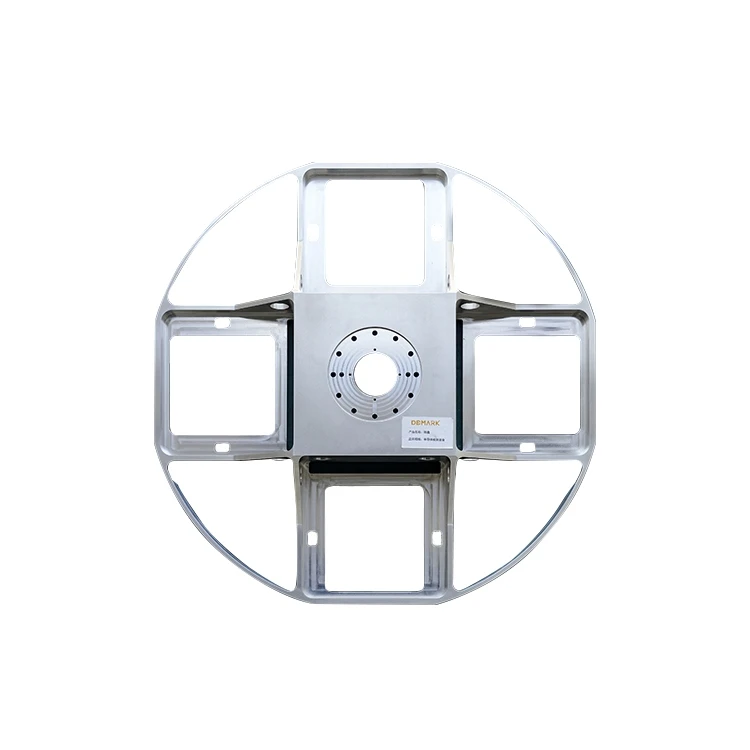

In addition to the overall size, you also need to consider the shape of the support plate. Some applications may require a flat support plate, while others may need a custom-shaped plate to fit the contours of the equipment. Our company offers a wide range of standard sizes and shapes, as well as the ability to produce custom-designed support plates to meet your exact specifications.
4. Surface Finish
The surface finish of the support plate can have a significant impact on its performance and longevity. A smooth surface finish can reduce friction and wear, while a rough surface may cause damage to the components being supported.
There are several types of surface finishes available, including anodizing, painting, and powder coating. Anodizing is a popular choice for aluminum alloy support plates as it provides a hard, corrosion-resistant surface. Painting and powder coating can also provide protection against corrosion and improve the appearance of the support plate.
5. Compatibility with Other Components
When choosing a support plate, it is important to ensure that it is compatible with the other components in your system. This includes considering factors such as the mounting method, the type of fasteners used, and the electrical or thermal properties of the support plate.
For example, if your equipment requires electrical insulation, you may need to choose a support plate made from a non-conductive material or apply an insulating coating. If your system generates a lot of heat, you may need to select a support plate with good thermal conductivity to help dissipate the heat.
6. Cost
Cost is always a factor to consider when making any purchasing decision. While it is important to choose a support plate that meets your quality and performance requirements, you also need to ensure that it fits within your budget.
When comparing the cost of different support plates, it is important to consider the total cost of ownership, which includes not only the purchase price but also the cost of installation, maintenance, and replacement over the life of the support plate. Our support plates offer a high level of quality and performance at a competitive price, providing excellent value for your money.
Our Product Offerings
As a leading support plate supplier, we offer a wide range of support plates to meet the diverse needs of our customers. In addition to our standard Support Plate, we also provide Capacitance Reducing Plate and Aluminum Alloy Parts Turntable.
Our products are manufactured using advanced production techniques and high-quality materials to ensure the highest level of quality and reliability. We also offer custom design and manufacturing services to meet your specific requirements. Whether you need a standard support plate or a custom-designed solution, we have the expertise and resources to provide you with the right product.
Conclusion
Choosing the right support plate is a critical decision that can have a significant impact on the performance and reliability of your equipment. By considering factors such as material selection, load capacity, size and shape, surface finish, compatibility with other components, and cost, you can make an informed decision and select a support plate that meets your specific needs.
As a trusted support plate supplier, we are committed to providing our customers with high-quality products and excellent customer service. If you have any questions or need assistance in choosing the right support plate for your application, please don't hesitate to contact us. We look forward to working with you and helping you find the perfect solution for your needs.
References
- "Materials Science and Engineering: An Introduction" by William D. Callister Jr. and David G. Rethwisch
- "Mechanical Design Handbook" by Robert C. Juvinall and Kurt M. Marshek
- "Engineering Mechanics: Statics" by R.C. Hibbeler


