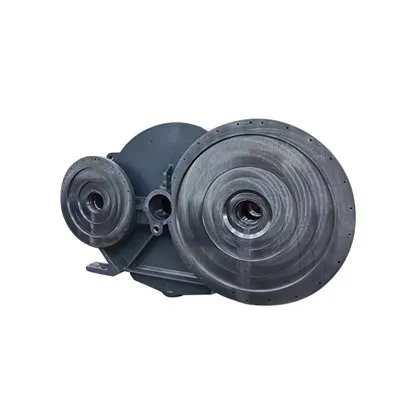
Hey there! As a compressor rotor supplier, I've been in the thick of it, seeing firsthand how these vital components play a massive role in the overall efficiency of the compressor cycle. So, let's dive right in and explore how the compressor rotor contributes to making things run like a well - oiled machine.
How the Compressor Rotor Works
First off, we need to understand what a compressor rotor does. Simply put, the compressor rotor is like the heart of a compressor. It rotates at high speeds, sucking in gas at a low pressure from the inlet side and then squeezing it to a much higher pressure as it moves towards the outlet side. This compression process is the essence of how a compressor functions, and the rotor is the key player in making it happen.
The compressor rotor typically consists of a shaft with a series of blades or lobes. These blades are precisely designed to interact with the gas. As the rotor spins, the shape of the blades creates chambers of varying sizes. When these chambers are at their largest, they allow a large volume of low - pressure gas to enter. As the rotor continues to turn, the chambers shrink, compressing the gas and increasing its pressure.
Impact on Flow and Pressure
One of the main ways the compressor rotor contributes to overall efficiency is by optimizing the flow of gas through the compressor. A well - designed rotor creates a smooth and continuous flow of gas. There are no sudden jerks or disruptions that could cause energy losses.
For instance, centrifugal compressor rotors are designed in a way that the gas is accelerated radially outwards as the rotor spins. This smooth acceleration helps in maintaining a high flow rate. Axial compressor rotors, on the other hand, have blades that are angled to push the gas axially along the length of the compressor. The precision in blade design ensures that the gas moves in an orderly manner, reducing turbulence. Less turbulence means less energy is wasted in creating random motion within the gas, which in turn boosts the efficiency of the compressor.
The rotor also has a direct impact on the pressure ratio of the compressor. The pressure ratio is the ratio of the discharge pressure to the inlet pressure. By increasing the surface area of the blades and improving the shape of the compression chambers, the rotor can achieve a higher pressure ratio with less energy input. A compressor with a high - efficiency rotor can reach the desired pressure levels faster and with less power consumption compared to a compressor with a poorly designed rotor.


Compressor Types and Rotor Performance
There are different types of compressors, such as scroll compressors, screw compressors, and centrifugal compressors, and each has a unique rotor design that contributes to its efficiency in different ways.
In scroll compressors, the rotor consists of two spiral - shaped scrolls. One scroll is fixed, and the other orbits around it. As the orbiting scroll moves, it traps pockets of gas between the two scrolls. These pockets gradually decrease in volume as the scrolls move, compressing the gas. The design of the scrolls is crucial. A properly designed scroll compressor rotor can reduce leakage of compressed gas, which is a significant source of efficiency loss.
Screw compressors use two helical rotors that mesh together. As the rotors turn, they draw in gas at one end and compress it as it moves along the length of the rotors. The shape of the helical rotors and the tightness of the mesh are key to the efficiency of screw compressors. A well - machined screw rotor can minimize internal leakage and ensure a high compression ratio, leading to better overall efficiency.
Centrifugal compressors rely on a high - speed impeller (a type of rotor) to accelerate the gas radially. The impeller blades are carefully designed to impart maximum kinetic energy to the gas. After the gas is accelerated, it passes through a diffuser, where the kinetic energy is converted into pressure energy. The efficiency of a centrifugal compressor depends largely on the design of the impeller. A good impeller design can achieve a high pressure rise with minimal energy losses.
Material and Manufacturing
The material used to make the compressor rotor also has a significant impact on efficiency. High - quality materials can withstand the high stresses and temperatures generated during the compression process. For example, some rotors are made from Ductile Iron Casting Gearbox, which offers good strength and durability. Ductile iron is also relatively easy to machine, allowing for precise manufacturing of complex rotor shapes.
The manufacturing process is equally important. Precision machining ensures that the rotor blades have the correct shape and dimensions. Any deviation from the design specifications can lead to inefficiencies. For example, if the blade angles are slightly off, the flow of gas may be disrupted, leading to increased turbulence and energy losses. Advanced manufacturing techniques, such as computer - numerical - control (CNC) machining, are commonly used to ensure high - precision rotor production.
Maintenance and Lifespan
A well - maintained compressor rotor can continue to contribute to high efficiency over its lifespan. Regular maintenance, such as cleaning, balancing, and inspection for wear and tear, is essential. For instance, if dirt or debris accumulates on the rotor blades, it can disrupt the gas flow and reduce efficiency. Balancing the rotor is also crucial as an unbalanced rotor can cause excessive vibration, which not only reduces efficiency but can also damage other components of the compressor.
A compressor rotor made from high - quality materials and manufactured with precision can have a long lifespan. However, even the best rotors may eventually need replacement. Choosing a reliable Compressor Rotor supplier like us ensures that you get a rotor that will perform efficiently for a long time and can be easily replaced when needed.
Energy Savings
The efficiency of a compressor rotor directly translates into energy savings. A more efficient rotor consumes less power to achieve the same level of compression. This means lower electricity bills for industrial and commercial users. For large - scale operations, where compressors run continuously, even a small improvement in rotor efficiency can result in significant cost savings over time.
Moreover, energy - efficient compressors are also more environmentally friendly. By consuming less power, they reduce the demand for electricity, which in turn can lower greenhouse gas emissions if the electricity is generated from fossil fuels.
Customization for Specific Applications
Not all applications require the same type of compressor rotor. Some processes may need a compressor with a high - pressure ratio, while others may prioritize a high flow rate. That's where customization comes in. As a compressor rotor supplier, we offer customized solutions to meet the specific needs of our customers.
For example, in the Fan Body manufacturing industry, the compressor needs to provide a certain volume of air at a specific pressure. We can design a rotor that is optimized for these requirements. Similarly, in a Ductile Iron Parts Workbench application, where precision is key, a customized rotor can be engineered to ensure consistent and efficient performance.
The Role of Compressor Rotor in System Integration
In real - world applications, compressors are often part of a larger system. The compressor rotor needs to be integrated smoothly with other components such as motors, valves, and piping. A well - designed rotor can improve the overall performance of the entire system.
For example, when the rotor is optimized for the specific characteristics of the motor, it can operate at its maximum efficiency without overloading the motor. Additionally, a rotor that creates a smooth flow of gas can reduce the wear and tear on valves and piping, leading to a more reliable and efficient system.
Wrapping Up and Contact
In conclusion, the compressor rotor is a critical component that significantly contributes to the overall efficiency of the compressor cycle. From optimizing gas flow and pressure to reducing energy consumption and enabling system integration, its impact is far - reaching.
If you're in the market for high - quality compressor rotors, we'd love to hear from you. Whether you need a standard rotor or a customized solution, we have the expertise and experience to meet your needs. Contact us to start a conversation about how we can help you improve the efficiency of your compressor system.
References
- "Compressor Handbook" by Klaus Brun and Eckard Specht
- "Thermodynamics of Turbomachinery" by S. L. Dixon
- Industry whitepapers on compressor technology and efficiency