Insulation is a critical aspect when it comes to vacuum chambers, especially in various industrial and scientific applications. As a supplier of Vacuum Chamber, I have witnessed firsthand the importance of proper insulation requirements. In this blog, I will delve into the details of what insulation requirements are essential for a vacuum chamber.
Why Insulation is Needed in a Vacuum Chamber
A vacuum chamber is designed to create and maintain a low - pressure environment. However, heat transfer can still occur through various mechanisms, such as conduction, convection (although minimized in a vacuum), and radiation. Insulation helps to control the temperature inside the chamber, which is crucial for several reasons.
First, many processes carried out in vacuum chambers are temperature - sensitive. For example, in semiconductor manufacturing, precise temperature control is necessary to ensure the quality of the fabricated chips. If the temperature fluctuates due to heat transfer from the outside environment, it can lead to defects in the final product.
Second, insulation can help to save energy. By reducing heat transfer, less energy is required to maintain the desired temperature inside the chamber. This is not only cost - effective but also more environmentally friendly.
Types of Heat Transfer in a Vacuum Chamber
Conduction
Conduction is the transfer of heat through a material. In a vacuum chamber, conduction can occur through the chamber walls, support structures, and any pipes or cables that penetrate the chamber. The rate of conduction depends on the thermal conductivity of the materials involved. For example, metals are good conductors of heat, while materials like ceramics and some polymers have lower thermal conductivities.
To reduce conduction, materials with low thermal conductivity are often used for the chamber walls and internal components. Additionally, insulating gaskets can be used at joints and interfaces to break the conduction path.
Radiation
Radiation is the transfer of heat through electromagnetic waves. Even in a vacuum, heat can be transferred by radiation between surfaces at different temperatures. The amount of radiation heat transfer depends on the surface properties (such as emissivity) and the temperature difference between the surfaces.
To reduce radiation heat transfer, reflective coatings can be applied to the inner surfaces of the chamber. These coatings have low emissivity, which means they reflect a large portion of the incident radiation and absorb less heat.
Convection
Although convection is significantly reduced in a vacuum, there may still be some residual gas molecules inside the chamber that can cause convective heat transfer. To minimize convection, the chamber is usually pumped down to a very low pressure, and any residual gas is removed as much as possible.
Insulation Materials for Vacuum Chambers
Fiberglass
Fiberglass is a commonly used insulation material due to its low thermal conductivity, high temperature resistance, and relatively low cost. It consists of fine glass fibers that trap air pockets, which act as insulators. Fiberglass insulation can be used in the form of blankets or boards and can be easily installed around the vacuum chamber.
Ceramic Fiber
Ceramic fiber insulation has excellent high - temperature resistance and low thermal conductivity. It is often used in high - temperature vacuum applications, such as in vacuum furnaces. Ceramic fiber can withstand temperatures up to 1600°C or higher, making it suitable for extreme heat environments.
Polyurethane Foam
Polyurethane foam is a lightweight and flexible insulation material. It has good insulation properties and can be sprayed or molded into various shapes to fit the vacuum chamber. However, it has a relatively low temperature limit and is more suitable for applications where the temperature is not extremely high.
Design Considerations for Insulation in Vacuum Chambers
Thickness of Insulation
The thickness of the insulation material is an important factor in determining its effectiveness. A thicker layer of insulation generally provides better thermal resistance. However, the thickness also needs to be balanced with the available space and the overall size of the vacuum chamber. In some cases, a trade - off may need to be made between insulation performance and the practicality of the chamber design.
Sealing and Integrity
Proper sealing of the insulation is crucial to prevent air leakage and ensure its long - term performance. Any gaps or holes in the insulation can allow heat transfer to occur, reducing the effectiveness of the insulation. Gaskets and seals should be used at all joints and interfaces to maintain a tight seal.
Compatibility with Chamber Materials
The insulation material must be compatible with the materials used in the vacuum chamber. For example, some insulation materials may outgas under vacuum conditions, which can contaminate the chamber environment. Therefore, it is important to choose insulation materials that have low outgassing rates and are chemically compatible with the chamber materials.
Applications and Their Insulation Requirements
Semiconductor Manufacturing
In semiconductor manufacturing, vacuum chambers are used for processes such as physical vapor deposition (PVD) and chemical vapor deposition (CVD). These processes require precise temperature control, typically in the range of a few hundred degrees Celsius. Insulation materials with low outgassing rates and high thermal stability are preferred. For example, ceramic fiber insulation may be used in high - temperature PVD chambers, while fiberglass or polyurethane foam may be suitable for lower - temperature CVD chambers.
Space Simulation
Vacuum chambers are used to simulate the space environment for testing spacecraft components. In this application, the chamber needs to be able to maintain extremely low temperatures, similar to those in space. Superinsulation materials, such as multi - layer insulation (MLI), are often used. MLI consists of multiple layers of thin reflective foils separated by low - conductivity spacers. It can provide very high thermal resistance and is suitable for the low - temperature, high - vacuum conditions of space simulation.
Vacuum Drying
Vacuum drying is a process used to remove moisture from materials. The temperature requirements for vacuum drying can vary depending on the material being dried. Generally, insulation is used to maintain a stable temperature inside the chamber and to prevent heat loss. Fiberglass or other low - cost insulation materials may be sufficient for most vacuum drying applications.
Insulation and the Role of Related Products
When considering the insulation of a vacuum chamber, related products such as Aluminum Alloy Parts Vacuum Suction Cup and Adapter Base Plate also play important roles. The vacuum suction cups are used to hold components inside the chamber, and they need to be designed in a way that minimizes heat transfer. For example, they can be made of materials with low thermal conductivity or have insulating coatings.
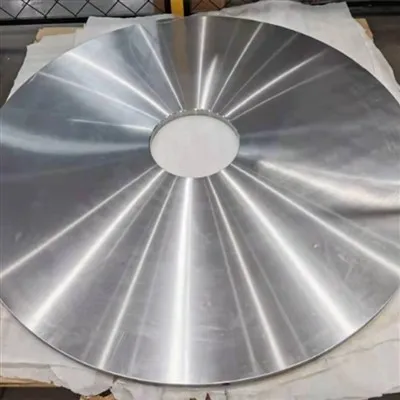
The adapter base plate is used to connect different components and systems to the vacuum chamber. It should also be designed to reduce heat transfer. Insulating materials can be used in the base plate or at its interfaces to prevent conduction heat transfer.
Conclusion
In conclusion, the insulation requirements for a vacuum chamber are complex and depend on various factors, including the type of application, the temperature range, and the budget. Proper insulation is essential for maintaining precise temperature control, saving energy, and ensuring the quality of processes carried out in the chamber.


As a supplier of Vacuum Chamber, we understand the importance of providing high - quality insulation solutions for our customers. We offer a range of vacuum chambers with different insulation options to meet the specific needs of various industries.
If you are interested in learning more about our vacuum chambers and their insulation capabilities, or if you have any specific requirements for your application, please feel free to contact us for procurement and further discussions.
References
- Incropera, F. P., & DeWitt, D. P. (2002). Fundamentals of Heat and Mass Transfer. Wiley.
- Howell, J. R., Mengüç, M. P., & Siegel, R. (2010). Thermal Radiation Heat Transfer. CRC Press.
- ASHRAE Handbook - Fundamentals. American Society of Heating, Refrigerating and Air - Conditioning Engineers.