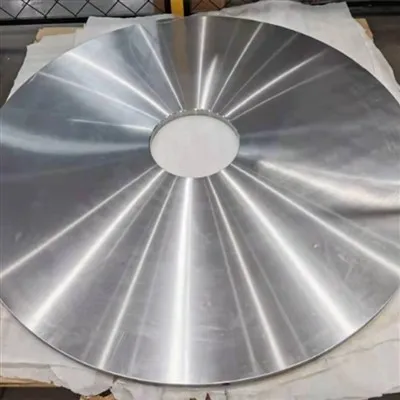
As a supplier of Large Steel Casting Boxes, I've had the privilege of being deeply involved in the intricate world of machining these robust components. Large steel casting boxes are essential in numerous industrial applications, from heavy machinery to power generation. In this blog, I'll delve into the various machining operations required to transform a raw steel casting into a precision-engineered Large Steel Casting Box.
Initial Inspection and Preparation
Before any machining operations commence, a thorough inspection of the raw steel casting is crucial. This involves checking for any visible defects such as cracks, porosity, or dimensional inaccuracies. Non - destructive testing methods like ultrasonic testing and magnetic particle inspection are often employed to detect internal flaws. Once the casting is deemed suitable for machining, it is cleaned to remove any sand, scale, or other contaminants that could affect the machining process.
Facing Operations
Facing is one of the first machining operations performed on a large steel casting box. The purpose of facing is to create a flat and smooth surface on the top and bottom of the box. This is typically done using a milling machine. A face mill cutter is used to remove a thin layer of material from the surface, ensuring that it is perpendicular to the sides of the box. This flat surface serves as a reference for subsequent machining operations and is essential for proper assembly and alignment of the box in its intended application.
Boring Operations
Boring is a critical machining operation for large steel casting boxes, especially when there are holes or cavities that need to be precisely sized. For example, in a Large Steel Casting Box used in a heavy - duty machine, there may be holes for shafts or bolts that require high precision. Boring can be done using a boring machine or a lathe, depending on the size and location of the holes. A boring bar is inserted into the pre - drilled hole, and the cutting tool on the end of the bar removes material to achieve the desired diameter and surface finish.
Milling Operations
Milling is a versatile machining process that can be used to create various features on a large steel casting box. In addition to facing, milling can be used to create slots, grooves, and complex shapes. End mills and ball - nose mills are commonly used in milling operations. For instance, if the casting box has a Hexahedral Cavity, a series of milling operations may be required to machine the six flat surfaces and the corners of the cavity to the required dimensions and tolerances.
Drilling Operations
Drilling is used to create holes in the large steel casting box. Depending on the application, different types of drills may be used, such as twist drills, center drills, or spot drills. For holes that require high precision, a pilot hole may be drilled first, followed by a finishing drill to achieve the final diameter. In some cases, multiple holes may need to be drilled in a specific pattern, and jigs or fixtures are used to ensure accurate hole placement.
Tapping Operations
After drilling holes, tapping is often required to create internal threads. Tapping is the process of cutting threads inside a pre - drilled hole using a tap. This is essential when the casting box needs to be assembled with bolts or other threaded components. Different types of taps, such as hand taps or machine taps, can be used depending on the size and depth of the hole. Care must be taken during tapping to ensure that the threads are cut cleanly and to the correct pitch.

Grinding Operations
Grinding is a finishing operation that is used to achieve a high - quality surface finish and tight dimensional tolerances. Surface grinding can be used to further refine the flat surfaces created during facing operations. Cylindrical grinding may be used to finish the surfaces of holes or shafts if required. Grinding removes a very small amount of material and can improve the surface smoothness, roundness, and straightness of the machined features.
Deburring and Finishing
Once all the major machining operations are completed, deburring is carried out to remove any sharp edges or burrs left behind by the cutting tools. This is important for safety reasons and to prevent damage to other components during assembly. After deburring, the large steel casting box may undergo additional finishing operations such as painting or coating to protect it from corrosion and improve its appearance.

Quality Control
Throughout the machining process, strict quality control measures are in place. This includes regular dimensional checks using precision measuring instruments such as calipers, micrometers, and coordinate measuring machines (CMMs). Visual inspections are also conducted to ensure that the surface finish meets the required standards. Any deviations from the specifications are immediately addressed to ensure that the final product meets the high - quality expectations of our customers.
Importance of Precision Machining
Precision machining of large steel casting boxes is of utmost importance. In applications such as heavy machinery, power plants, and marine equipment, these boxes play a crucial role in the overall performance and reliability of the system. A small dimensional error or a poor surface finish can lead to issues such as misalignment, excessive wear, and even system failure. By using advanced machining techniques and strict quality control, we can ensure that our Large Steel Casting Boxes meet the most demanding requirements of our customers.
Connecting Flanges and Their Machining
Many large steel casting boxes are equipped with Connecting Flanges. These flanges need to be machined to ensure proper sealing and connection with other components. The machining of connecting flanges involves facing, drilling bolt holes, and creating a smooth surface for the gasket. The bolt holes must be accurately spaced and sized to ensure a secure connection. Additionally, the flange face may need to be machined to a specific surface finish to prevent leakage.
Custom Machining for Specific Applications
We understand that different customers may have unique requirements for their large steel casting boxes. That's why we offer custom machining services. Whether it's a special shape, a specific surface finish, or unique features, our experienced machining team can work closely with customers to develop a customized machining solution. This flexibility allows us to meet the diverse needs of various industries and applications.
Conclusion
The machining operations for large steel casting boxes are a complex and precise process that requires a combination of advanced machinery, skilled operators, and strict quality control. From the initial inspection to the final finishing touches, every step is crucial in ensuring that the final product meets the highest standards of quality and performance. As a supplier of large steel casting boxes, we are committed to providing our customers with the best - in - class products through our expertise in machining operations.

If you are in need of high - quality large steel casting boxes or have any questions about our machining services, we invite you to reach out to us for a procurement discussion. We look forward to working with you to meet your specific requirements.
References
- "Machining Handbook" by Oberg, Jones, and Horton
- "Manufacturing Engineering and Technology" by Kalpakjian and Schmid