

As a seasoned supplier of cast carbon steel parts, I've witnessed firsthand the pivotal role these components play across various industries. Cast carbon steel parts are renowned for their durability, strength, and versatility, making them a staple in applications ranging from heavy machinery to automotive manufacturing. One of the most critical aspects of these parts is their fatigue properties, which can significantly impact their performance and longevity. In this blog, I'll delve into the fatigue properties of cast carbon steel parts, exploring what they are, why they matter, and how we ensure the highest quality in our products.
Understanding Fatigue in Cast Carbon Steel Parts
Fatigue is a phenomenon that occurs when a material is subjected to repeated loading and unloading cycles. Over time, these cycles can cause microscopic cracks to form and propagate within the material, eventually leading to failure. In the context of cast carbon steel parts, fatigue can be particularly problematic because these parts are often used in high-stress applications where they are exposed to cyclic loads.
The fatigue properties of cast carbon steel parts are influenced by several factors, including the chemical composition of the steel, the casting process, and the heat treatment applied. For example, the presence of certain alloying elements can enhance the fatigue resistance of the steel by improving its strength and toughness. Similarly, a well-controlled casting process can minimize the formation of defects such as porosity and inclusions, which can act as stress concentrators and reduce the fatigue life of the part.
Chemical Composition and Fatigue Resistance
The chemical composition of cast carbon steel plays a crucial role in determining its fatigue properties. Carbon is the primary alloying element in carbon steel, and its content can significantly affect the strength and hardness of the material. Generally, higher carbon content results in increased strength but reduced ductility, which can have implications for fatigue resistance.
In addition to carbon, other alloying elements such as manganese, silicon, and chromium can also be added to cast carbon steel to improve its fatigue properties. Manganese, for example, can enhance the hardenability of the steel and improve its resistance to wear and fatigue. Silicon can increase the strength and hardness of the steel, while chromium can improve its corrosion resistance and fatigue strength.
At our company, we carefully control the chemical composition of our cast carbon steel parts to ensure optimal fatigue resistance. We use high-quality raw materials and state-of-the-art melting and casting processes to achieve the desired chemical composition and minimize the presence of impurities.
Casting Process and Fatigue Life
The casting process is another critical factor that can influence the fatigue properties of cast carbon steel parts. During casting, the molten steel is poured into a mold and allowed to solidify. The quality of the casting depends on several factors, including the design of the mold, the pouring temperature, and the cooling rate.
A well-designed mold can ensure uniform solidification of the steel and minimize the formation of defects such as shrinkage cavities and porosity. These defects can act as stress concentrators and reduce the fatigue life of the part. Additionally, controlling the pouring temperature and cooling rate can help to optimize the microstructure of the steel and improve its fatigue resistance.
We employ advanced casting techniques and quality control measures to ensure the highest quality in our cast carbon steel parts. Our experienced team of engineers and technicians carefully monitor every step of the casting process to ensure that the parts meet or exceed the required specifications.
Heat Treatment and Fatigue Performance
Heat treatment is often used to improve the mechanical properties of cast carbon steel parts, including their fatigue performance. By subjecting the parts to controlled heating and cooling cycles, the microstructure of the steel can be modified to enhance its strength, hardness, and toughness.
One common heat treatment process used for cast carbon steel parts is quenching and tempering. Quenching involves rapidly cooling the part from a high temperature to room temperature, which results in the formation of a hard and brittle microstructure. Tempering is then performed to reduce the brittleness and improve the toughness of the part.
Another heat treatment process that can improve the fatigue resistance of cast carbon steel parts is stress relieving. This process involves heating the part to a moderate temperature and holding it there for a period of time to relieve internal stresses that may have been introduced during casting or machining.
At our company, we offer a range of heat treatment options to meet the specific requirements of our customers. Our heat treatment facilities are equipped with state-of-the-art equipment and are operated by highly skilled technicians who ensure that the parts are treated to the highest standards.
Applications of Cast Carbon Steel Parts
Cast carbon steel parts are used in a wide range of applications, including automotive, aerospace, construction, and industrial machinery. In the automotive industry, for example, cast carbon steel parts are used in engine components, transmission systems, and suspension systems. These parts are subjected to high-stress and cyclic loads, making their fatigue properties critical for reliable performance.
In the aerospace industry, cast carbon steel parts are used in aircraft engines, landing gear, and structural components. The high strength and fatigue resistance of these parts are essential for ensuring the safety and reliability of aircraft.
In the construction industry, cast carbon steel parts are used in bridges, buildings, and other infrastructure projects. These parts are often exposed to harsh environmental conditions and cyclic loads, making their fatigue properties crucial for long-term durability.
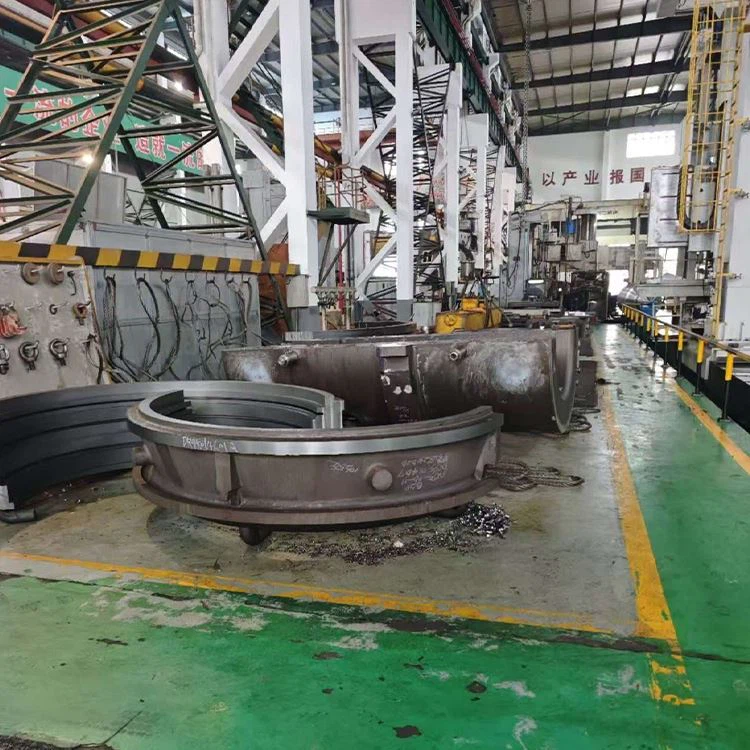
We offer a comprehensive range of cast carbon steel parts to meet the diverse needs of our customers. Some of our popular products include Large Steel Casting Shell Cast Steel Joint, Connecting Flange, and Grinding Power Head Mount. These parts are manufactured to the highest quality standards and are available in a variety of sizes and specifications.
Ensuring Quality and Performance
As a supplier of cast carbon steel parts, we are committed to providing our customers with products that meet or exceed their expectations. We have a rigorous quality control system in place to ensure that every part we produce meets the highest standards of quality and performance.
Our quality control process begins with the selection of high-quality raw materials. We source our steel from reputable suppliers and conduct thorough inspections to ensure that it meets our strict specifications. During the casting process, we use advanced non-destructive testing techniques such as ultrasonic testing and X-ray inspection to detect any defects in the parts.
After casting, the parts undergo a series of machining and finishing operations to achieve the desired dimensions and surface finish. We use state-of-the-art machining equipment and techniques to ensure the highest level of precision and accuracy. Finally, the parts are subjected to a comprehensive final inspection to ensure that they meet all the required specifications.

Conclusion
The fatigue properties of cast carbon steel parts are critical for their performance and longevity in a wide range of applications. By carefully controlling the chemical composition, casting process, and heat treatment of our parts, we can ensure that they have excellent fatigue resistance and meet the highest standards of quality and performance.
If you are in the market for high-quality cast carbon steel parts, we invite you to contact us to discuss your specific requirements. Our experienced team of sales and engineering professionals will be happy to assist you in selecting the right parts for your application and provide you with a competitive quote. We look forward to the opportunity to work with you and help you achieve your goals.
References
- ASM Handbook Volume 1: Properties and Selection: Irons, Steels, and High-Performance Alloys. ASM International.
- Metals Handbook Desk Edition, Third Edition. ASM International.
- Casting, Forming and Welding - Processes and Design. Tata McGraw-Hill Education.


