

Hey there! As a supplier of cast carbon steel parts, I've had my fair share of experiences when it comes to ensuring the quality of our products. One crucial aspect that we always focus on is the fatigue resistance of these parts. In this blog, I'll share with you how we test the fatigue resistance of cast carbon steel parts.
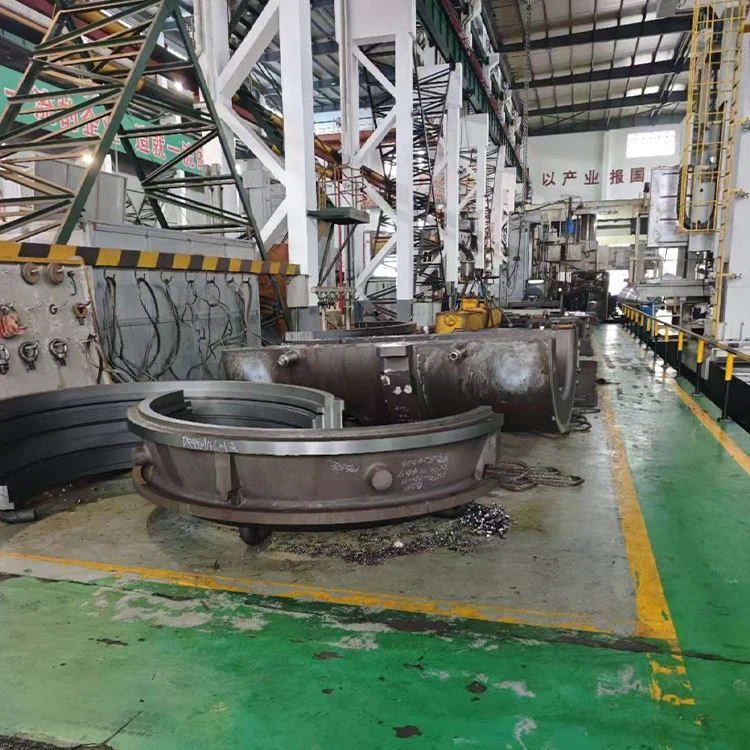
First off, let's understand why fatigue resistance is so important. Cast carbon steel parts are used in a wide range of applications, from industrial machinery to automotive components. These parts often have to endure repeated loading and unloading cycles over their lifespan. If they don't have good fatigue resistance, they can crack or even break under these cyclic loads, which can lead to equipment failure and safety hazards.
So, how do we go about testing the fatigue resistance of our cast carbon steel parts? Well, there are a few methods that we commonly use, and I'll walk you through each of them.
1. Stress - Life (S - N) Testing
This is one of the most widely used methods for testing fatigue resistance. The basic idea behind S - N testing is to subject the test specimens to a cyclic load at a constant stress amplitude and count the number of cycles it takes for the specimen to fail.
We start by preparing a set of test specimens from the cast carbon steel parts. These specimens are usually machined to a specific shape and size according to the relevant standards. Then, we use a fatigue testing machine to apply a cyclic load to the specimens. The load can be either axial (tension - compression), bending, or torsional, depending on the type of loading the actual part will experience in service.
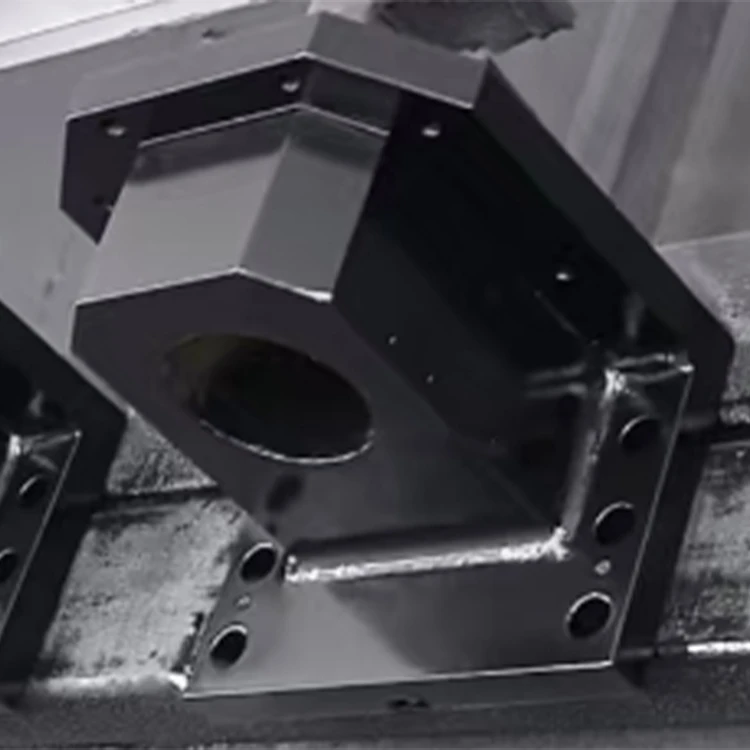
For example, if we're testing a Grinding Power Head Mount, which might be subjected to bending loads during operation, we'll use a bending fatigue testing machine. We set the stress amplitude at a certain level and start the testing. The machine keeps track of the number of cycles until the specimen fails.
We repeat this process for different stress amplitudes. By plotting the stress amplitude (S) on the y - axis and the number of cycles to failure (N) on the x - axis on a logarithmic scale, we can obtain an S - N curve. This curve gives us a good indication of the fatigue life of the cast carbon steel at different stress levels.
2. Strain - Life (ε - N) Testing
In some cases, especially when the parts are subjected to low - cycle fatigue (where the number of cycles to failure is relatively small), strain - life testing is more appropriate.
Unlike S - N testing, which focuses on stress, ε - N testing focuses on strain. We use a strain - controlled fatigue testing machine to apply a cyclic strain to the test specimens. The machine measures the strain and the corresponding stress during the testing process.
Just like in S - N testing, we prepare a set of specimens and subject them to different strain amplitudes. We record the number of cycles to failure for each strain amplitude. By plotting the plastic strain amplitude (εp) or the total strain amplitude (εt) against the number of cycles to failure (N) on a logarithmic scale, we can obtain an ε - N curve.
This method is particularly useful for parts that experience large plastic deformations during service, such as Cylinder Support. These parts may be subjected to high - load conditions that cause significant plastic strain, and ε - N testing can help us accurately predict their fatigue life.
3. Crack Growth Testing
Another important aspect of fatigue resistance is the crack growth behavior of the cast carbon steel parts. Even if a part doesn't fail immediately under cyclic loading, small cracks can initiate and grow over time, eventually leading to failure.
In crack growth testing, we start by introducing a small crack or notch into the test specimen. Then, we subject the specimen to a cyclic load using a fatigue testing machine. We use techniques such as optical microscopy or ultrasonic testing to monitor the growth of the crack over time.
We measure the crack length at regular intervals and calculate the crack growth rate (da/dN), where da is the change in crack length and dN is the number of cycles. By plotting the crack growth rate against the stress intensity factor range (ΔK), we can obtain a crack growth curve. This curve helps us understand how the crack will grow under cyclic loading and allows us to predict the remaining life of the part once a crack has initiated.
For large and complex parts like Large Steel Casting Shell Cast Steel Joint, crack growth testing is crucial. These parts may have pre - existing defects or inclusions that can act as crack initiation sites, and understanding the crack growth behavior can help us take appropriate measures to prevent catastrophic failure.
Factors Affecting Fatigue Resistance
It's important to note that several factors can affect the fatigue resistance of cast carbon steel parts. These include:
- Material Composition: The carbon content and the presence of other alloying elements in the cast carbon steel can have a significant impact on its fatigue resistance. For example, increasing the carbon content can improve the strength of the steel but may also reduce its ductility, which can affect fatigue performance.
- Microstructure: The microstructure of the cast carbon steel, such as the grain size and the distribution of phases, can also influence fatigue resistance. Finer grain sizes generally lead to better fatigue properties.
- Surface Finish: A smooth surface finish can reduce stress concentrations and improve fatigue resistance. Rough surfaces can act as crack initiation sites, increasing the likelihood of fatigue failure.
- Residual Stress: Residual stresses introduced during the casting and machining processes can either enhance or reduce fatigue resistance. Compressive residual stresses can improve fatigue performance, while tensile residual stresses can be detrimental.
Quality Control and Assurance
As a supplier, we take quality control and assurance very seriously. Before shipping any cast carbon steel parts to our customers, we conduct a series of tests to ensure that they meet the required fatigue resistance standards.
We not only perform the fatigue tests I mentioned above but also carry out other non - destructive testing methods, such as ultrasonic testing, magnetic particle testing, and dye penetrant testing, to detect any internal or surface defects that could affect fatigue performance.
We also keep detailed records of all the test results and perform statistical analysis to monitor the consistency of our products. If any issues are detected, we take immediate corrective actions, such as adjusting the casting process parameters or improving the heat treatment process.
Why Choose Our Cast Carbon Steel Parts
Our cast carbon steel parts are known for their high - quality and excellent fatigue resistance. We use state - of - the - art testing equipment and follow strict quality control procedures to ensure that every part we produce meets the highest standards.
Whether you need a Grinding Power Head Mount, a Cylinder Support, or a Large Steel Casting Shell Cast Steel Joint, you can trust that our products will perform reliably under cyclic loading conditions.
If you're in the market for high - quality cast carbon steel parts, we'd love to hear from you. Contact us to discuss your specific requirements and let's start a fruitful business partnership!
References
- ASTM E466 - 15, Standard Practice for Conducting Force - Controlled Constant - Amplitude Axial Fatigue Tests of Metallic Materials.
- ASTM E606/E606M - 12, Standard Test Method for Strain - Controlled Fatigue Testing.
- ASTM E399 - 12, Standard Test Method for Linear - Elastic Plane - Strain Fracture Toughness KIc of Metallic Materials.


