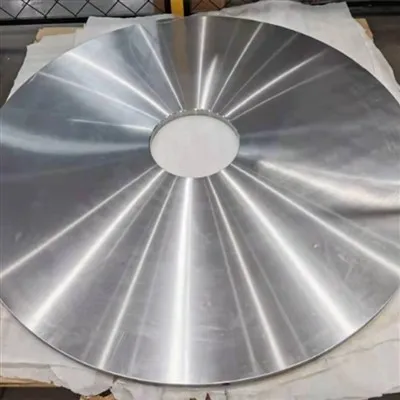
As a trusted supplier of Fan Bodies, I've spent years delving into the intricate relationship between a Fan Body and the surrounding air. This exploration is not just about understanding the physical phenomena but also about leveraging this knowledge to provide high - quality products that meet the diverse needs of our customers. In this blog, I'll take you through the scientific aspects of how a Fan Body interacts with the surrounding air.
The Basic Principles of Air Interaction
At the heart of a fan's operation lies the fundamental principle of fluid dynamics. A Fan Body is designed to convert mechanical energy into kinetic energy of the air. When the fan blades rotate, they push the air molecules, creating a pressure difference between the inlet and the outlet of the fan. This pressure difference is what drives the air to move through the Fan Body.
The shape and design of the Fan Body play a crucial role in this process. The curvature of the fan blades, for example, is carefully engineered to optimize the lift and drag forces acting on the air. A well - designed blade can efficiently transfer energy from the rotating shaft to the air, resulting in a higher volume of air being moved with less power consumption.
Airflow Patterns
The interaction between a Fan Body and the surrounding air gives rise to specific airflow patterns. There are two main types of airflow commonly associated with fans: axial and radial.
Axial Airflow
Axial fans, as the name suggests, move air parallel to the axis of the fan shaft. The Fan Body of an axial fan typically consists of a series of blades mounted on a hub. As the blades rotate, they draw air in axially and expel it in the same direction. Axial fans are known for their high flow rates and are commonly used in applications where large volumes of air need to be moved, such as in ventilation systems. The Ductile Iron Parts Workbench can be used in the manufacturing process of axial fan bodies to ensure high - precision and durable components.
Radial Airflow
Radial fans, on the other hand, move air perpendicular to the axis of the fan shaft. In a radial fan, the air enters the Fan Body axially and is then redirected radially by the blades. Radial fans are capable of generating higher pressures compared to axial fans, making them suitable for applications where air needs to be forced through a resistance, such as in HVAC systems with long duct runs. The Ductile Iron Parts Rotating Stage can contribute to the smooth rotation of the radial fan's impeller, enhancing its performance.
Turbulence and Noise Generation
One of the challenges in the interaction between a Fan Body and the surrounding air is the generation of turbulence and noise. Turbulence occurs when the airflow becomes irregular, with eddies and vortices forming in the air. This can happen due to various factors, such as the shape of the Fan Body, the speed of rotation, and the presence of obstacles in the airflow path.
Turbulence not only reduces the efficiency of the fan but also generates noise. The noise produced by a fan can be a significant issue, especially in applications where a quiet environment is required, such as in offices or residential buildings. To minimize turbulence and noise, Fan Bodies are often designed with smooth surfaces and aerodynamic shapes. Additionally, advanced materials and manufacturing techniques, like those used in the Ductile Iron Casting Gearbox, can help in reducing vibrations and improving the overall stability of the fan, thereby reducing noise levels.
Heat Transfer and Cooling
Another important aspect of the interaction between a Fan Body and the surrounding air is heat transfer. Fans are commonly used for cooling purposes, such as in electronic devices or industrial machinery. When air flows over a hot surface, it absorbs heat from the surface through convection.


The efficiency of heat transfer depends on several factors, including the airflow rate, the temperature difference between the surface and the air, and the surface area available for heat transfer. A well - designed Fan Body can ensure a high - velocity and uniform airflow over the hot surface, maximizing the heat transfer rate. For example, in a computer cooling fan, the Fan Body is designed to direct the airflow precisely over the CPU and other heat - generating components, keeping them at a safe operating temperature.
Impact of Environmental Conditions
The interaction between a Fan Body and the surrounding air can also be affected by environmental conditions. Factors such as air density, temperature, and humidity can all influence the performance of a fan.
Air density, which is affected by altitude and temperature, plays a significant role in the amount of air a fan can move. At higher altitudes, the air density is lower, which means that the fan needs to work harder to move the same volume of air. Similarly, high temperatures can reduce air density, affecting the fan's performance. Humidity can also have an impact, as moist air is less dense than dry air.
Our Role as a Fan Body Supplier
As a Fan Body supplier, we understand the importance of these scientific principles in the design and manufacturing of our products. We use state - of - the - art technology and high - quality materials to ensure that our Fan Bodies are optimized for efficient air interaction. Our team of engineers is constantly researching and developing new designs to improve the performance, reduce noise, and enhance the durability of our products.
We offer a wide range of Fan Bodies to meet the diverse needs of our customers. Whether you need an axial fan for a large - scale ventilation project or a radial fan for a high - pressure application, we have the expertise and resources to provide you with the right solution.
Contact Us for Procurement
If you're in the market for high - quality Fan Bodies, we invite you to contact us for procurement. Our dedicated sales team is ready to assist you with any questions you may have and to provide you with detailed product information. We are committed to providing excellent customer service and ensuring that you get the best value for your investment. Don't hesitate to reach out and start a fruitful business relationship with us.
References
- White, F. M. (2006). Fluid Mechanics. McGraw - Hill.
- Cengel, Y. A., & Cimbala, J. M. (2014). Fluid Mechanics: Fundamentals and Applications. McGraw - Hill Education.
- Incropera, F. P., & DeWitt, D. P. (2002). Fundamentals of Heat and Mass Transfer. John Wiley & Sons.