

Hey there! As a supplier of large turbine housings, I often get asked about how these massive components resist wear and tear. Well, buckle up, because I'm about to take you on a deep - dive into the world of large turbine housing durability.
Understanding the Wear and Tear in Turbine Housings
First off, let's talk about what kind of wear and tear large turbine housings face. Turbines operate in some of the harshest conditions imaginable. High - temperature gases, high - pressure steam, and constant mechanical vibrations are just the tip of the iceberg. These factors can lead to different types of damage, like corrosion, erosion, and mechanical fatigue.
Corrosion is a biggie. When the housing is exposed to moisture or certain chemicals in the working environment, it can start to rust. Erosion, on the other hand, happens when tiny particles in the gas or steam flow over the housing surface at high speed, gradually wearing it away. Mechanical fatigue occurs due to the repeated stress and strain from the turbine's operation, which can cause cracks over time.
Material Selection: The First Line of Defense
One of the most crucial aspects of making large turbine housings resistant to wear and tear is choosing the right materials. We typically use high - grade steel alloys. These alloys are specifically designed to have excellent strength, heat resistance, and corrosion resistance.
For example, some of the alloys we work with contain elements like chromium and nickel. Chromium helps form a protective oxide layer on the surface of the housing, which acts as a barrier against corrosion. Nickel, on the other hand, enhances the alloy's toughness and ductility, making it better able to withstand mechanical stress without cracking.
Another important factor in material selection is the casting process. We use advanced casting techniques to ensure that the material has a uniform structure. A uniform structure means that the housing will have consistent properties throughout, reducing the risk of weak spots that could lead to premature wear.
Surface Treatments: Adding an Extra Layer of Protection
In addition to using the right materials, we also apply various surface treatments to our large turbine housings. One common treatment is nitriding. Nitriding involves introducing nitrogen into the surface layer of the housing. This creates a hard, wear - resistant layer that can significantly improve the housing's resistance to erosion and mechanical wear.
Another popular surface treatment is coating. We can apply ceramic coatings or other specialized coatings to the housing's surface. These coatings can provide additional protection against corrosion and heat. For instance, ceramic coatings have excellent thermal insulation properties, which can help reduce the temperature of the underlying metal, thereby reducing the risk of thermal fatigue.
Design Features for Wear Resistance
The design of the large turbine housing also plays a vital role in its ability to resist wear and tear. We pay close attention to the shape and geometry of the housing. For example, we design the housing to have smooth internal surfaces. Smooth surfaces reduce the turbulence of the gas or steam flow, which in turn reduces the erosion caused by the high - speed particles.
We also incorporate features like Cylinder Support and Connecting Flange. These components are designed to distribute the stress evenly across the housing, reducing the risk of mechanical fatigue. The Large Steel Casting Shell Cast Steel Joint is another important design element that helps maintain the integrity of the housing structure.
Quality Control: Ensuring Long - Term Performance
Quality control is an ongoing process in our production of large turbine housings. We have strict inspection procedures at every stage of the manufacturing process. From the raw material inspection to the final product testing, we make sure that every housing meets our high standards.
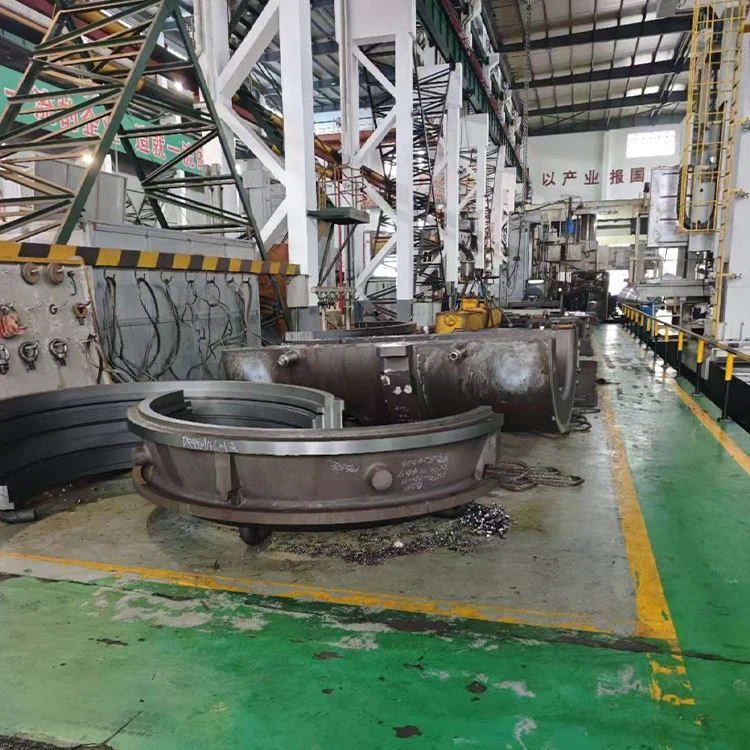

We use non - destructive testing methods like ultrasonic testing and magnetic particle testing to detect any internal flaws or cracks in the housing. If we find any issues, we take immediate corrective action to ensure that the housing is safe and reliable.
Maintenance and Monitoring
Even with the best materials, surface treatments, and design, proper maintenance and monitoring are essential for the long - term performance of large turbine housings. Regular inspections can help detect early signs of wear and tear, allowing for timely repairs or replacements.
We also recommend using advanced monitoring systems. These systems can continuously monitor the housing's temperature, vibration, and other operating parameters. By analyzing the data from these systems, operators can identify potential problems before they become serious, and take preventive measures to extend the housing's lifespan.
Conclusion: Why Choose Our Large Turbine Housings
In conclusion, our large turbine housings are designed and manufactured with a focus on wear and tear resistance. From the careful selection of materials to the application of advanced surface treatments and innovative design features, we take every possible step to ensure that our housings can withstand the harsh conditions of turbine operation.
If you're in the market for large turbine housings, we'd love to have a chat with you. Our team of experts can provide you with more detailed information about our products and how they can meet your specific needs. Whether you're looking for a housing for a power plant, an industrial turbine, or any other application, we're confident that we can offer you a solution that will stand the test of time. So, don't hesitate to reach out and start a conversation about your turbine housing requirements.
References
- "Materials Science and Engineering: An Introduction" by William D. Callister Jr. and David G. Rethwisch
- "Turbine Engineering and Applications" by S. L. Dixon


