

Large turbine housings play a pivotal role in the efficient and safe operation of turbines, which are widely used in power generation, aviation, and industrial applications. One of the most critical aspects of these large turbine housings is their ability to prevent leakage. As a leading supplier of large turbine housings, we understand the importance of this issue and have employed a variety of advanced techniques and design features to ensure minimal leakage. In this blog, we will delve into the methods and technologies we use to prevent leakage in large turbine housings.
Material Selection
The choice of materials is fundamental in preventing leakage in large turbine housings. We carefully select high - quality materials that possess excellent mechanical properties, corrosion resistance, and thermal stability. For instance, we often use alloy steels, which offer high strength and toughness, making them suitable for withstanding the high pressures and temperatures inside the turbine. These materials are also resistant to corrosion, which is crucial as corrosion can create small holes or cracks in the housing, leading to leakage.
Another important consideration is the coefficient of thermal expansion. Turbines operate under varying temperatures, and materials with similar coefficients of thermal expansion are selected to ensure that different parts of the housing expand and contract uniformly. This uniformity helps to maintain the integrity of the housing and prevent gaps from forming due to differential thermal expansion, which could result in leakage.
Precision Manufacturing
Precision manufacturing is key to preventing leakage in large turbine housings. Our manufacturing process involves state - of the - art machining techniques to ensure that all components are produced to exact specifications. High - precision machining equipment is used to create smooth surfaces and accurate dimensions. For example, the internal surfaces of the housing need to be extremely smooth to minimize the risk of fluid or gas seeping through any irregularities.
We also pay close attention to the tolerances of each part. Tight tolerances ensure that components fit together perfectly, leaving no room for leakage. During the manufacturing process, strict quality control measures are in place to verify that all parts meet the required specifications. Any part that does not meet the standards is rejected, ensuring that only high - quality components are used in the assembly of the turbine housing.
Sealing Systems
Sealing systems are one of the most important elements in preventing leakage in large turbine housings. We use a variety of sealing techniques, including gaskets, O - rings, and labyrinth seals.
Gaskets are commonly used between mating surfaces, such as Connecting Flange. They are made of materials such as rubber, graphite, or metal, depending on the application. Gaskets work by filling the microscopic gaps between the two surfaces, creating a tight seal. The material of the gasket is selected based on factors such as temperature, pressure, and the type of fluid or gas being sealed.
O - rings are another effective sealing solution. They are circular elastomeric seals that are placed in grooves to create a seal between two components. O - rings are highly flexible and can conform to the shape of the mating surfaces, providing an excellent seal even under high pressures.
Labyrinth seals are often used in high - speed turbine applications. They consist of a series of grooves and ridges that create a tortuous path for the fluid or gas. This design makes it difficult for the fluid or gas to leak past the seal, as it has to travel through the complex path, losing energy along the way.
Structural Design
The structural design of the large turbine housing also plays a significant role in preventing leakage. We use advanced computer - aided design (CAD) and finite element analysis (FEA) tools to optimize the design of the housing.
One important design feature is the use of Hexahedral Cavity and Cylinder Support structures. These structures provide additional support and reinforcement to the housing, helping to maintain its shape and integrity under high pressures. By distributing the stress evenly across the housing, these design elements reduce the risk of cracks or deformation, which could lead to leakage.
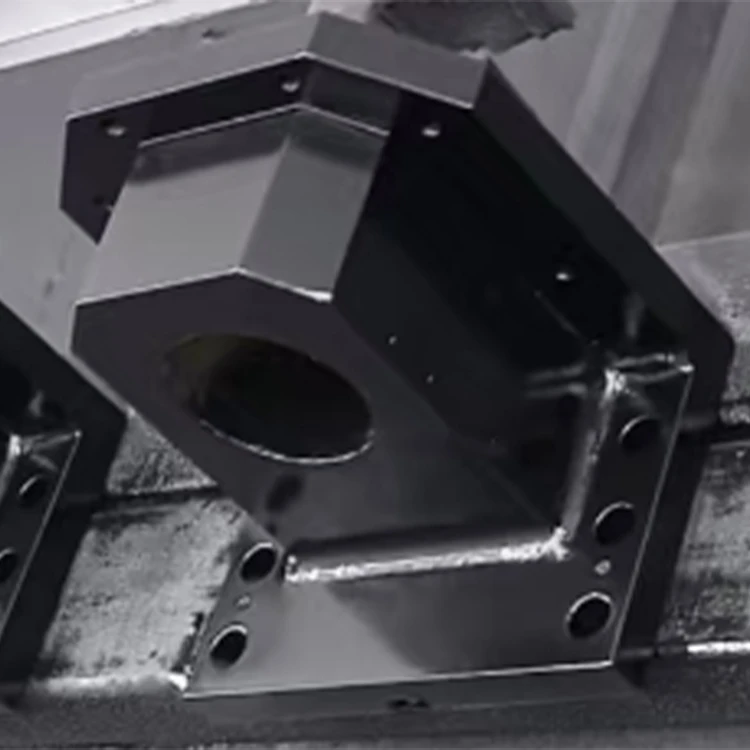
We also design the housing with proper drainage channels and vents. These features are essential for removing any accumulated fluids or gases inside the housing, preventing pressure build - up that could cause leakage.
Surface Treatment
Surface treatment is an important step in preventing leakage. We apply various surface coatings to the turbine housing to enhance its corrosion resistance and reduce friction. For example, a ceramic coating can be applied to the internal surfaces of the housing to protect it from chemical attack and wear.
In addition, surface finishing techniques such as polishing are used to improve the smoothness of the surfaces. A smooth surface reduces the likelihood of fluid or gas adhering to the surface and seeping through small gaps.
Assembly and Installation
Proper assembly and installation are crucial for preventing leakage in large turbine housings. Our technicians are highly trained to follow strict assembly procedures. All components are carefully cleaned and inspected before assembly to ensure that there are no contaminants or defects that could affect the seal.
During the installation process, the housing is aligned correctly, and all bolts and fasteners are tightened to the specified torque. Over - tightening or under - tightening can lead to uneven pressure distribution and potential leakage. We also use torque wrenches to ensure accurate tightening, and we perform regular checks during the installation process to verify the integrity of the assembly.

Monitoring and Maintenance
Even with the best design and manufacturing practices, regular monitoring and maintenance are necessary to ensure long - term leakage prevention. We provide our customers with comprehensive monitoring solutions, including sensors that can detect changes in pressure, temperature, and vibration. These sensors can alert operators to potential leakage issues before they become serious problems.

In addition, we offer maintenance services that include regular inspections, cleaning, and replacement of worn - out components. By replacing gaskets, O - rings, and other sealing elements at the appropriate intervals, we can prevent leakage and extend the lifespan of the turbine housing.
Conclusion
Preventing leakage in large turbine housings is a complex and multi - faceted challenge. As a supplier of large turbine housings, we have employed a comprehensive approach that includes material selection, precision manufacturing, advanced sealing systems, optimized structural design, surface treatment, proper assembly and installation, and regular monitoring and maintenance.
If you are in the market for high - quality large turbine housings that are designed to prevent leakage, we invite you to contact us for a detailed discussion of your requirements. Our team of experts is ready to provide you with the best solutions and support for your turbine applications.
References
- Smith, J. (2018). "Materials for High - Performance Turbines." Journal of Materials Science.
- Johnson, A. (2019). "Sealing Technologies in Turbine Applications." Proceedings of the International Turbine Conference.
- Brown, C. (2020). "Structural Design Optimization for Turbine Housings." ASME Journal of Turbomachinery.


